
More than 80 years after the end of the Second World War, millions of tonnes of ammunition remain on the seabed around Europe. Some of it is corroding, releasing explosive compounds into the surrounding water and sediment.
The problem is particularly significant in the Baltic and North seas. In the German North Sea and Baltic Sea alone, an estimated 1.6 million tonnes of high-explosive munitions are thought to have been dumped at sea, much of it following the Second World War.
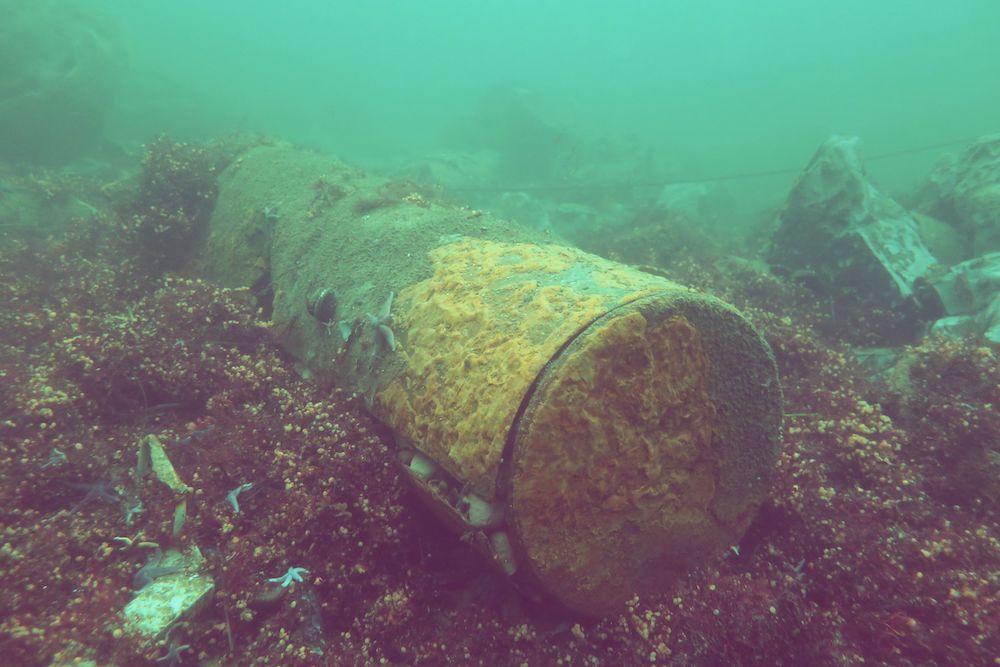
The ammunition has spent decades underwater. Some of the thicker steel casings can take centuries to break down, while thinner-walled weapons have already corroded, leaving explosive material exposed directly to the marine environment.
The issue is not a new one. Dumping unwanted ammunition at sea became common after high explosives emerged in the late 19th century.
“Explosive munitions have been used in warfare since the discovery of high explosives, and that’s late 1800s,” says Peter Nieuwveld, solution owner for UXO mitigation at Fugro. “When those munitions either needed to be hidden very quickly to avoid capture or are no longer needed, obsolete or defective in some way, it very quickly was realised that the safest, cheapest, most secure method of getting rid of those things was to just put them in the sea.”
That practice continued for decades. The 1972 London Convention prohibited the dumping of industrial waste and other materials at sea, although disposal of munitions continued in some locations into the 1990s.
A different kind of UXO problem
The presence of ammunition on the seabed is not new to the offshore engineering industry. Unexploded ordnance (UXO) surveys have become a familiar part of offshore wind development, for example.
But dumped munitions create a very different engineering problem.
“With a regular UXO project and a dumped marine munitions site mitigation project, there’s a difference in risk, and there’s also a difference in scale,” Nieuwveld says.
A conventional UXO survey can cover a large area of seabed in search of one or two potentially dangerous objects. Dumped munitions sites are effectively the opposite problem: large numbers of weapons are concentrated in relatively small areas.
“It’s a kind of needle in a haystack type of problem,” Nieuwveld says of conventional UXO work. “You’re not looking for a big pile of dump munitions. You’re actually looking at a vast area of seabed, and you’re trying to find the one or two items that could be dangerous.”
At dumped munitions sites, the task becomes industrial rather than forensic.
“With UXO survey, you’re dealing with one item at a time,” Nieuwveld says. “With dumped munitions, you really need an industrialised approach to deal with a huge number of items.”
In Lübeck Bay, off Germany’s Baltic coast, researchers have identified around 400 dumping piles. Other dumping operations involved scuttled vessels or were carried out quickly, leaving ammunition scattered over much larger areas.
The problem is not limited to the seabed itself. Chemicals released by degrading explosives have been detected in marine organisms, while weather and currents can bring smaller pieces of ammunition ashore.
Torsten Frey, a researcher at the GEOMAR Helmholtz Centre for Ocean Research in Kiel, says people living in northern Germany are generally aware that the problem exists.
“They don’t know all the details, they don’t know all the ins and outs, but they are aware that there is an issue,” he says.
One particular hazard is white phosphorus. Small pieces of ammunition can wash up on beaches during storms or periods of strong currents. White phosphorus can ignite when exposed to air and can resemble amber.
“In the Baltic Sea, there is a phenomenon of white phosphorus, which ignites when it gets in contact with air and looks very much like amber,” Frey says.
That has led to warnings for beachgoers not to pick up suspicious pieces of material and to place potential white phosphorus in water.
Finding the bottleneck
The first step in dealing with dumped ammunition is finding it. But according to Frey, detection is no longer necessarily the biggest technical challenge.
GEOMAR is leading CAMMera – the ClearAnce of dumped Marine Munitions in European seas – a consortium funded with €5.6 million through the European Union’s Pilot Project and Preparatory Actions programme. Its partners include Fugro, Dynasafe and Sitara, as well as Ukrainian specialists working on automated target recognition.
The project is concentrating on what happens after an object has been found.
“For us, it was very important to focus on actually advancing, particularly clearance and disposal methods,” Frey says. “A lot of research has gone into more efficient detection of munitions, but when we look at the value chain of removing munitions, the bottleneck is still the clearance and particularly the disposal.”
The imbalance is straightforward: searching can now happen faster than clearance, and clearance can happen faster than disposal.
Traditional UXO operations tend to deal with individual objects, either removing them cautiously or detonating them underwater. Controlled detonations can be carried out with measures such as pneumatic bubble curtains to reduce the effects of shockwaves on marine life.
That approach does not translate easily to a site containing thousands of dumped weapons. Nor is sending divers into such an environment an attractive option.
Most of the ammunition in dumping sites is unfired and, importantly, unfused. That potentially makes it possible to use different methods for recovering it.
“How much can we scale down our safety concerns?” Frey asks. “Because most of the munitions in the dump sites are not fused, so in theory they should be safe to handle, which should make clearance more efficient.”
The challenge is then one of scale.
“The problem is that these technologies are comparatively expensive and inefficient,” Frey says. “In a dump site you have on one munition pile thousands of objects, so what you need is scaling up and an automation. You don’t want to send divers down there, both for safety and for efficiency reasons.”
Going after the pollution sources
Fugro is contributing to CAMMera through two work packages. One of them, Work Package 3, is looking at specialised tooling that can be deployed from surface vessels or remotely operated vehicles (ROVs).
One reason this is important is that existing mechanical equipment is better suited to some types of ammunition than others.
German clearance campaigns have used crane-mounted mechanical grabs to recover material from the seabed. Those systems can pick up intact shells, but they are less useful when a casing has broken down and explosive material is spread across the seabed.
That matters because some relatively small numbers of degraded weapons can account for a large proportion of the pollution at a particular site.
In Lübeck Bay, around 15 exposed V1 warheads are estimated to account for roughly 90% of the localised chemical pollution. The exposed TNT and RDX can continue to leach into the surrounding water and sediment.
Fugro is therefore looking at how to isolate these sources.
Nieuwveld describes the approach as “developing tooling specifically to be deployed from a vessel or from an ROV that will capture these exposed lumps of TNT and these broken shells, isolate them from the marine environment in some way, and then give us the opportunity to intervene and to solve the problem by destroying them in some way.”
The immediate objective is not necessarily to remove every piece of ammunition from the seabed at once. Capturing exposed explosive material could first stop an active source of contamination, while disposal methods are developed and scaled.
Dynasafe, another CAMMera partner, is working on technologies including mobile detonation ovens that could be used to destroy recovered explosives.
Who pays for the clean-up?
Even if the engineering problems can be solved, there is another question: who pays?
Jennifer Youn, New Business Manager at Fugro for the Marine Asset Integrity Business Line, leads CAMMera’s Work Package 7, which is looking at the commercial framework for dumped munitions clearance.
Youn says the scale of the problem was something she was not aware of before becoming involved with the project.
“Before Peter, I’d never even heard of this issue,” she says. “It’s just no one is really aware of this problem, and when I looked at this research, I was really shocked to see the magnitude of this issue, and that it’s a global issue.”
There is an obvious problem with paying to clean up material that has been abandoned in international waters or in areas where several countries have an interest.
The benefits of removing it are also shared. Cleaner seabeds can benefit fishing, shipping, offshore energy and coastal communities, making it difficult to assign the cost to a single organisation or country.
CAMMera has therefore been working with stakeholders in countries bordering the Baltic, North Sea, Black Sea, Mediterranean and Atlantic to understand both awareness of the problem and national priorities.
“We said, okay, let’s start out with first, let’s measure the level of awareness with stakeholders beyond the Baltic Sea,” Youn says. The project is also seeking to identify the relevant organisations and decision-makers in each region.
The level of awareness varies. Germany has already committed significant public funding to marine munitions clearance, while elsewhere the process of understanding the scale of the problem is only beginning.
European policy could provide another route forward. The European Ocean Pact, published in 2025, includes environmental restoration and maritime security among its six pillars. Its security provisions include ambitions to remove UXOs and dumped munitions from European seas.
“There is ambition for removal of UXOs from all European seas,” Youn says. “So this is what validates our activities to go into these different countries.”
For Youn, establishing the case for action also means working out how success will be measured.
“Where is the line where we could say, ‘we did the work’ has to be defined as well,” she says. That requires monitoring to establish the actual environmental impact before and after intervention.
A problem without borders
Germany has taken a leading role in dealing with the marine munitions legacy, but the environmental consequences do not stop at national boundaries.
Chemical contamination can spread through water and sediment, while fish and other marine organisms move between jurisdictions. Dumped munitions can also interfere with offshore construction, fishing and shipping.
“Other countries are following Germany’s example as a leader in this area, because they’re made aware of this issue and how they’re impacted,” Youn says. “If Germany targets this issue and does something about it that’s great, but their neighbouring countries, or the countries sharing that sea base in the Baltic Sea, they’re all impacted by this issue.”
The challenge facing CAMMera is therefore bigger than finding a better way to pick up old ammunition. It is about creating a system that can survey large areas, recover thousands of objects, deal with exposed explosives and dispose of the material – at a cost that governments and other stakeholders are prepared to fund.
The ammunition may have been sitting on the seabed for decades, but the engineering challenge is only now becoming industrial in scale.