
Nasa successfully impacted an asteroid with a spacecraft last month. The mission formed part of a planetary defence research experiment and was designed to assess the extent such an impact would deflect an asteroid.
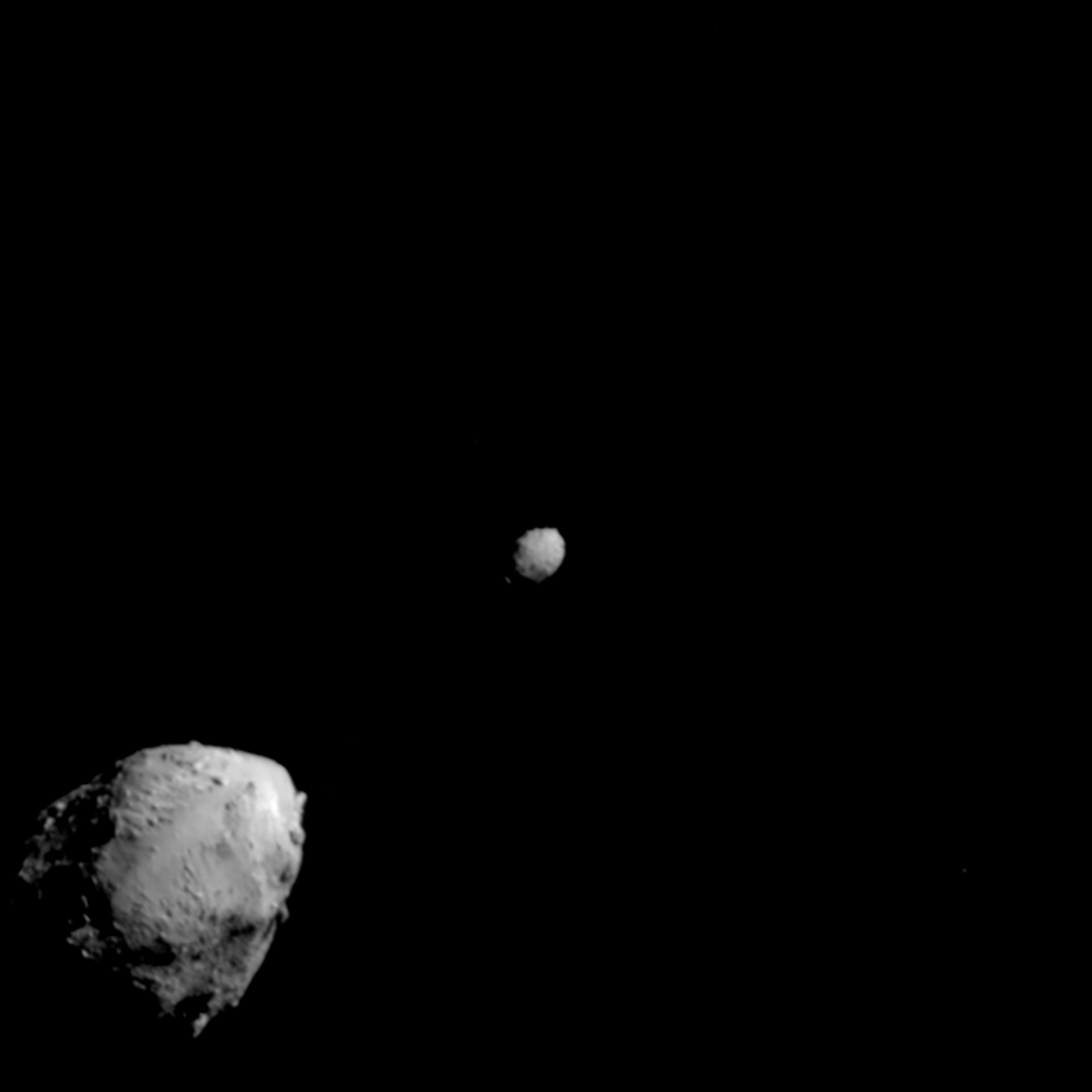
Nasa stated that its spacecraft, the ‘Double Asteroid Redirection Test’ (Dart) was the first planetary defence technology demonstration ever. The craft travelled through space for 10 months before hitting a 160m diameter object named Dimorphos, which was itself in orbit around a 780m asteroid called Didymos.
Dart itself was a 560kg box that crashed into the approximately five-million-tonne moonlet at 22,530 km per hour.
A spokesperson for Nasa said, “The mission’s one-way trip confirmed Nasa can successfully navigate a spacecraft to intentionally collide with an asteroid to deflect it, a technique known as kinetic impact.
“The investigation team will now observe Dimorphos using ground-based telescopes to confirm that DART’s impact altered the asteroid’s orbit around Didymos. Researchers expect the impact to shorten Dimorphos’ orbit by about 1% […] precisely measuring how much the asteroid was deflected is one of the primary purposes of the full-scale test.”
A global team will assess Dimorphos over the coming years to confirm the precise mass of the body and total deflection. The eventual aim is to be able to deflect future asteroids that pose a risk to Earth. Dimorphos did not and does not pose such a risk.