
The European Space Agency (ESA) is trying to push space-based solar power (SBSP) and will put a proposal they call Solaris to ESA Council of Ministers in November, although the ESA has not said how much funding they are after.
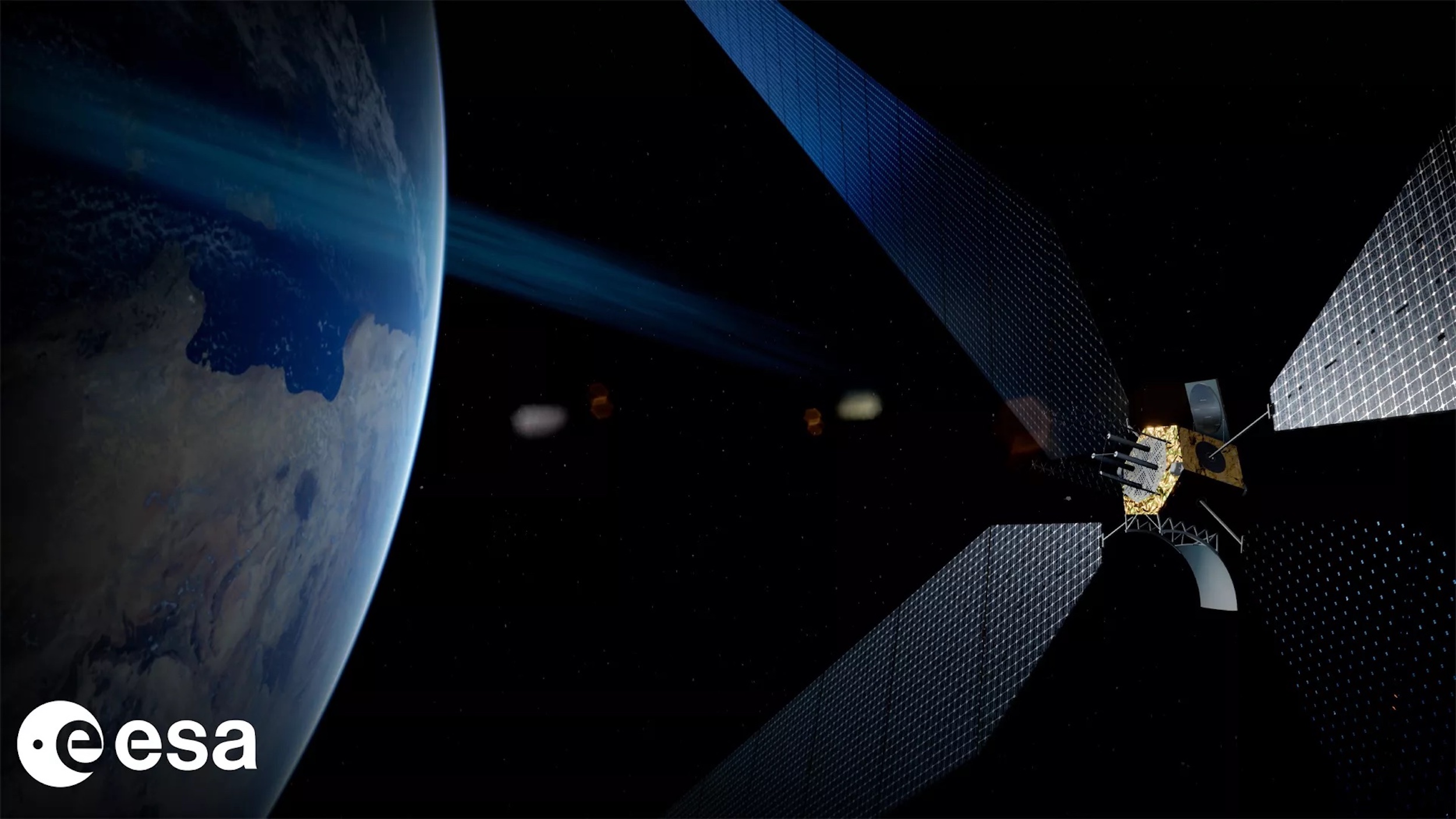
The idea of SBSP is to harness the suns energy from outside the Earth’s atmosphere where the sunlight is 10x more intense than on the ground in Europe. It would then send that energy back to Earth.
“Space-based solar power would be an important step towards carbon neutrality and energy independence for Europe,” ESA’s director general Josef Aschbacher tweeted on 16 August. “Two recent independent studies strongly recommend investments to advance the SBSP technologies needed to address our growing energy crisis.”
The ESA recently announced funding for 13 ideas out of the 85 they received on The Open Space Innovation Platform (OSIP) after asking for ideas to efficiently collect and transmit sunlight from outside the atmosphere back to Earth.
“We saw a really great mix of people interested in this topic – we had ideas from academic institutions, start-ups and traditional space companies,” says Advenit Makaya. “It’s good to see that so many entities are still interested; OSIP enabled us to connect with them and gather this rich collection of ideas from interested and experienced parties.”
The ESA stated that the decision on moving ahead with an ESA SBSP development programme will be made by 2025.
The idea of using SPSB first came about in the 1960s but has recently become a popular idea for providing clean renewable energy. The UK expressed interest in creating a SBSP system earlier this year, while China has already planned in-orbit tests before 2030 and hopes to have a system in place by 2050.