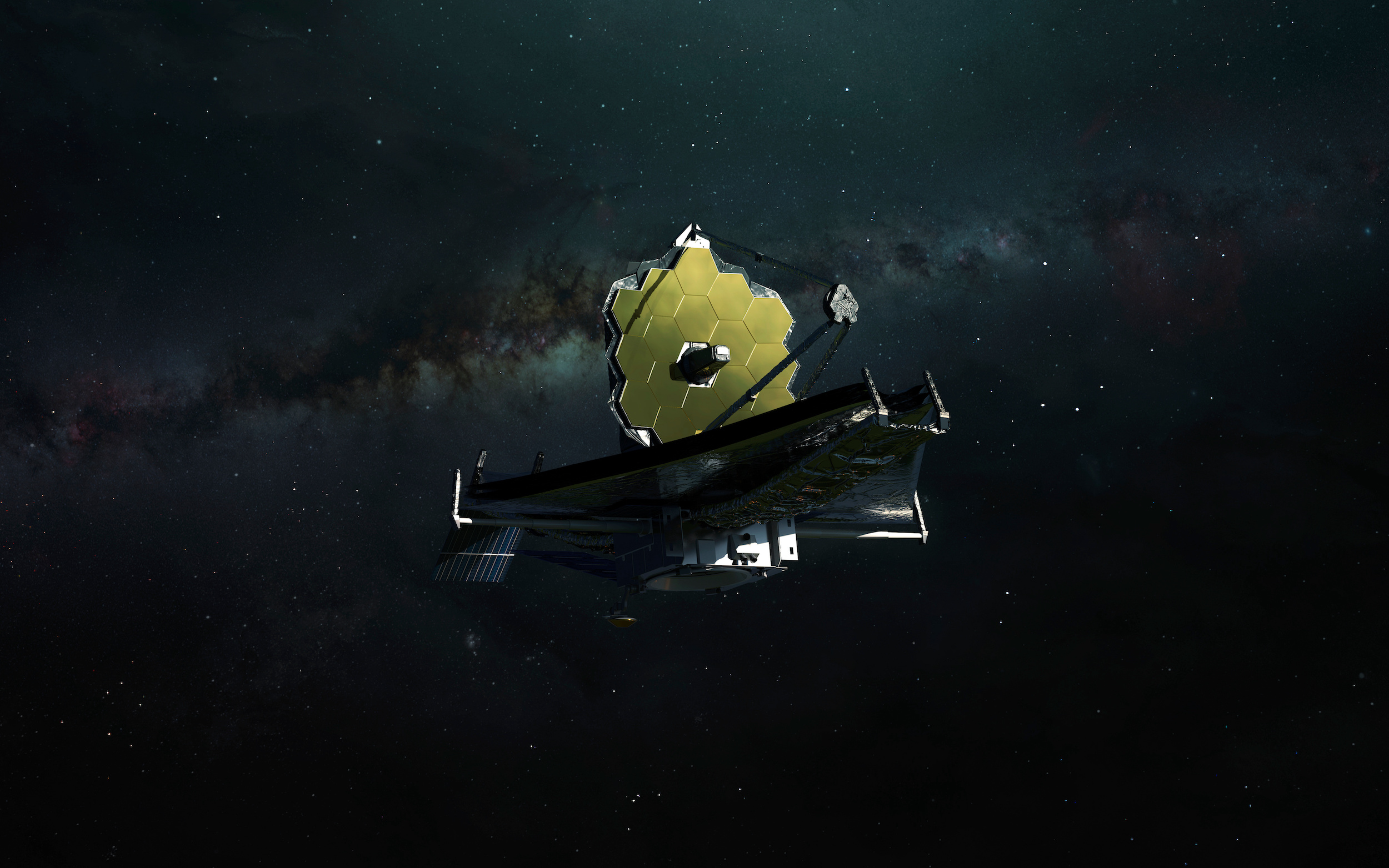

A dust-sized piece of rock has struck the primary mirror of the James Webb Space Telescope (JWST). According to an article on Reuters, the telescope will realign the affected mirror to compensate and will still perform at a level that exceeds all mission requirements.
The speed at which micrometeoroids such as this travel through space means that even small objects can be dangerous. This was the largest of five objects to impact the JWST so far, leaving a ‘dimple’ in the mirror.
NASA stated that photos from the JWST will be no less stunning. The first such pictures were expected to be released on 12 July 2022 at the time of writing.
“We always knew that Webb would have to weather the space environment, which includes harsh ultraviolet light and charged particles from the Sun, cosmic rays from exotic sources in the galaxy, and occasional strikes by micrometeoroids within our Solar System,” said Paul Geithner, technical deputy project manager at Nasa’s Goddard Space Flight Center.
“We designed and built Webb with performance margin – optical, thermal, electrical, mechanical – to ensure it can perform its ambitious science mission even after many years in space.”
The $10 billion JWST has been positioned in a solar orbit some 1.6 million kilometres away from Earth behind an immense heat shield, allowing it to operate at temperatures around 55K or minus 218°C. These conditions are essential for the far-infrared spectral range that the telescope sees in. This also means the telescope is too far away for maintenance missions.