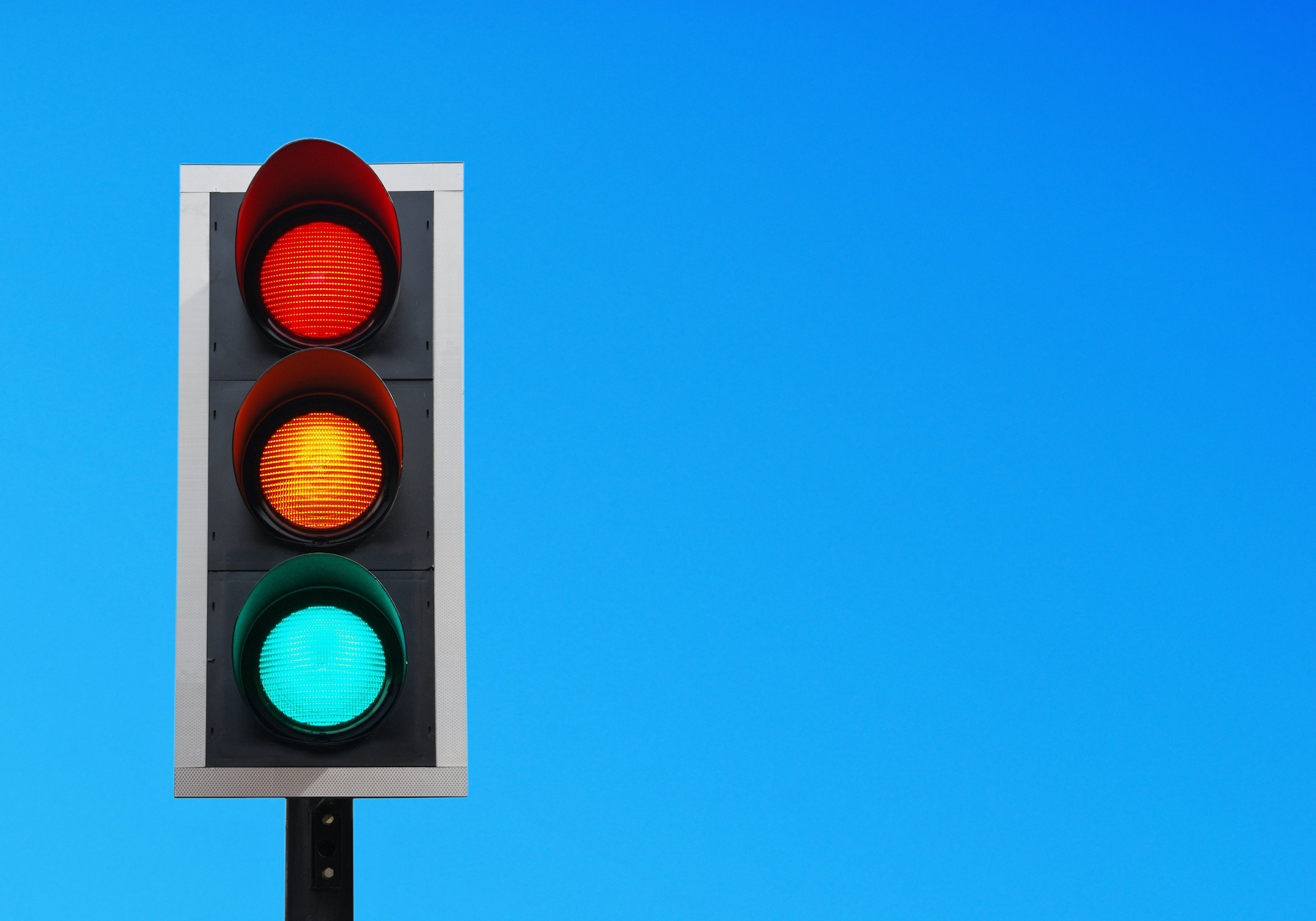

For the benefit of less traffic jams and therefore a better flow of traffic, a team of researchers have utilised artificial intelligence (AI) to enable smart traffic light technology.
According to an article via Innovation News Network, the team from Fraunhofer IOSB-INA have produced a system that combines high-resolution cameras and real-time sensors with AI. In addition, algorithms are trained to find the best rhythm and flow of colour switching for the lights.
Tests on this technology were performed in Lemgo, Germany.
“We used a junction in Lemgo, where our testing is carried out, to build a realistic simulation and trained the AI on countless iterations within this model,” said Arthur Müller, who is a project manager and scientist at Fraunhofer IOSB-INA.
“Prior to running the simulation, we added the traffic volume measured during rush hour into the model, enabling the AI to work with real data. This resulted in an agent trained using deep reinforcement learning: a neural network that represents the lights control.”
This particular test showed that this use of AI has the potential to enhance the flow of traffic by 10% to 15%.
Now, the team will adjust the technology to be tested in a real-life traffic environment, rather than a simulation.
“We are the first team in the world to test deep reinforcement learning for traffic light control under real-world conditions. And we hope that our project will inspire others to similar endeavours,” said Müller.