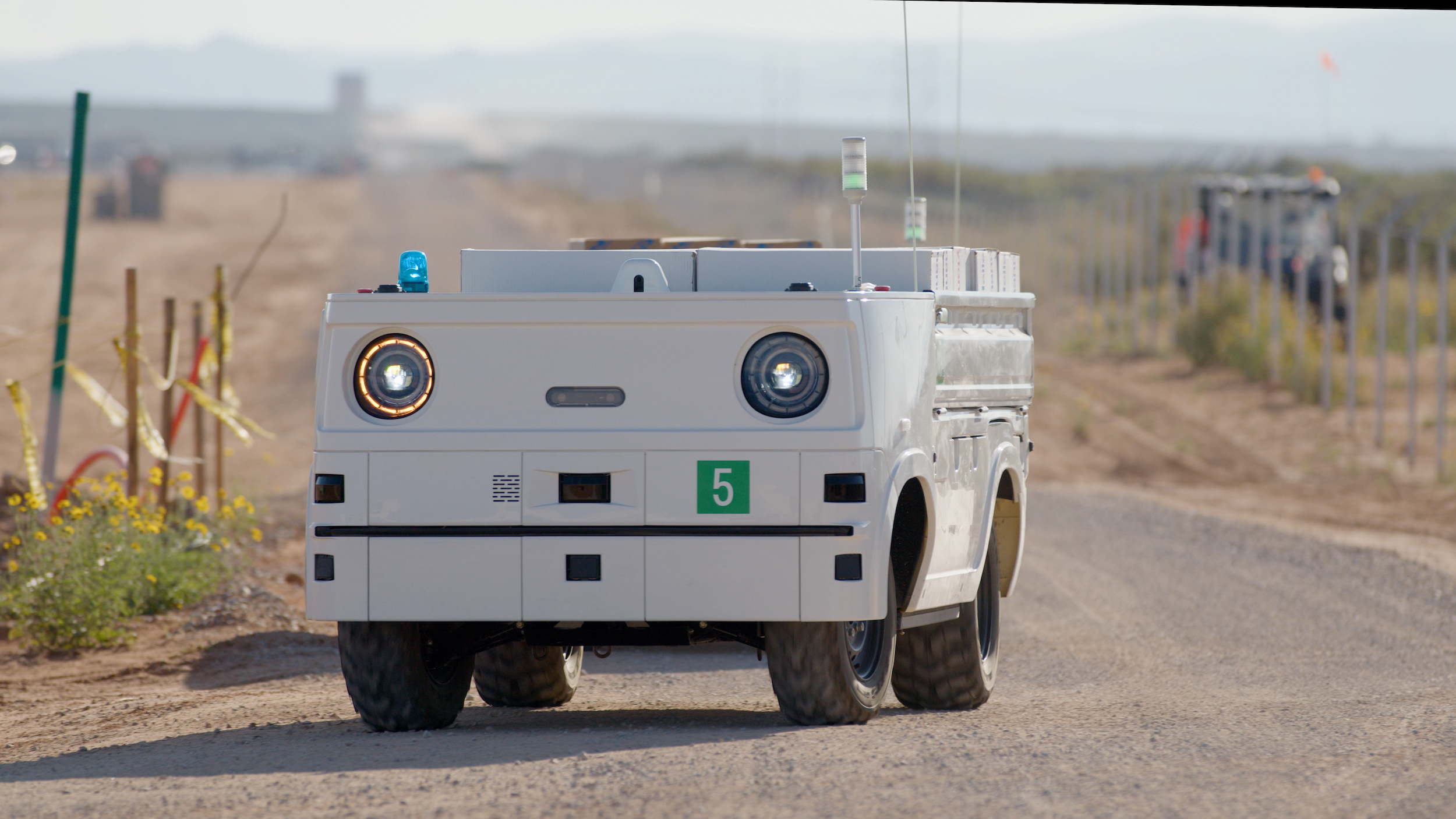

A second-generation autonomous work vehicle (AWV) has successfully performed a range of functions at a large-scale solar farm construction site in the US state of New Mexico.
Many large, spread-out construction and maintenance sites are experiencing a driver shortage in North America, Australia, and Europe. An AWV frees up valuable drivers for other tasks not suited to an autonomous vehicle.
This is the second-generation fully-electric AWV made by Honda. During the month-long field test at the Black & Veatch worksite, tests included towing activities and transporting construction materials, water, and other supplies to pre-set destinations within the work site.
In order to validate the capabilities of the Honda AWV, the company selected a solar energy construction site where support structures for solar panels are laid out in a grid pattern at regular intervals. The site was an ideal environment to test the ability of the Honda AWV to stop at precise points along a pre-set route.
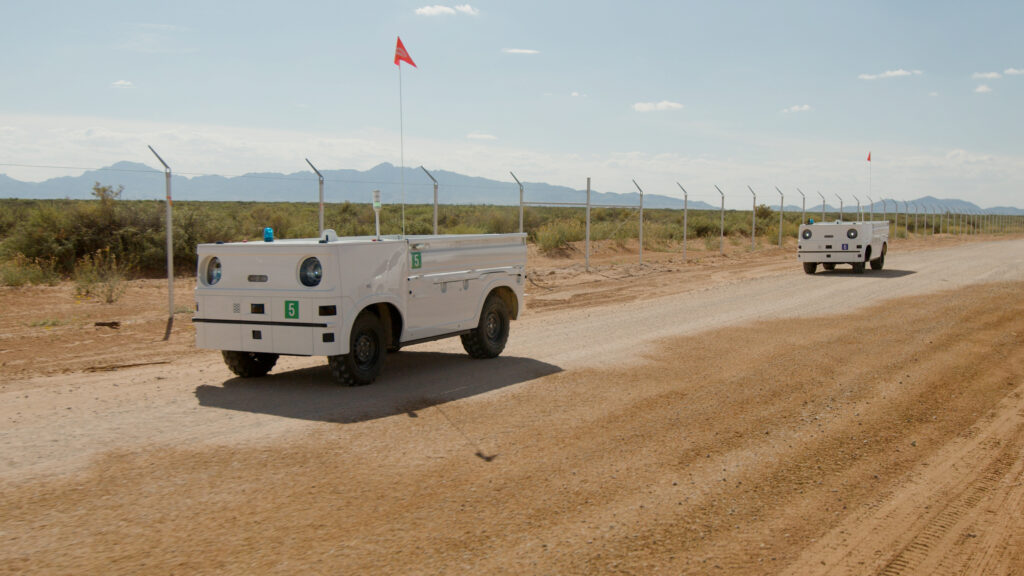
Honda produced a high-definition map of the 1,000-acre site that allowed Black & Veatch operators to precisely set start and stop points for multiple Honda AWVs using a cloud-based app interface that runs on tablets and PCs. The vehicles successfully delivered materials and supplies along a calculated route and proved capable of stopping within centimetres of the pre-set points.
The field test also demonstrated the viability of the Honda AWV battery system to support energy-intensive sensors and provide vehicle propulsion, while operating up to eight hours in a high-temperature environment. The vehicle carried payloads of nearly 900 pounds, and in a separate use case towed a trailer carrying over 1,600 pounds.
Based on the capabilities verified in this field test, Honda believes its AWV will be capable of providing a wide range of services to a variety of industries that need a rugged off-road autonomous solution, especially where workforce constraints and safety concerns make other solutions impractical. The ability to operate autonomously – or via remote control – and carry large payloads, along with the potential to add attachments and tools, makes the Honda AWV a suitable platform for many work environments.
Honda has not announced commercialization plans for the Honda AWV. but continues to advance the platform through field testing.
All photos: Honda