
The world’s agriculture industry is the second largest contributor to global warming, according to the Intergovernmental Panel on Climate Change(IPCC). Agriculture is also a leading driver of land-use change (for instance, through the conversion of biodiverse forests to croplands). Without meaningful innovation, greenhouse gas emissions from agricultural production could increase 58% by 2050.
Thrown into this mix is the world’s changing climate. For example, in the USA nearly 90 precent of all fresh produce is grown in California’s Great Central Valley and part of western Arizona. With this region entering into what many believe could be a 100-year drought, it does not seem conceivable that agriculture production of this scale can continue.
Some look at modern agriculture and see and industry that is bucking the trend of most others. While most at least acknowledge that a change needs to take place for more sustainable, clean growth, the agriculture industry around the world is going in the opposite direction
However, a US company based in Silicon Valley believes that robotics and automation could be the key factor in transforming the agriculture industry.
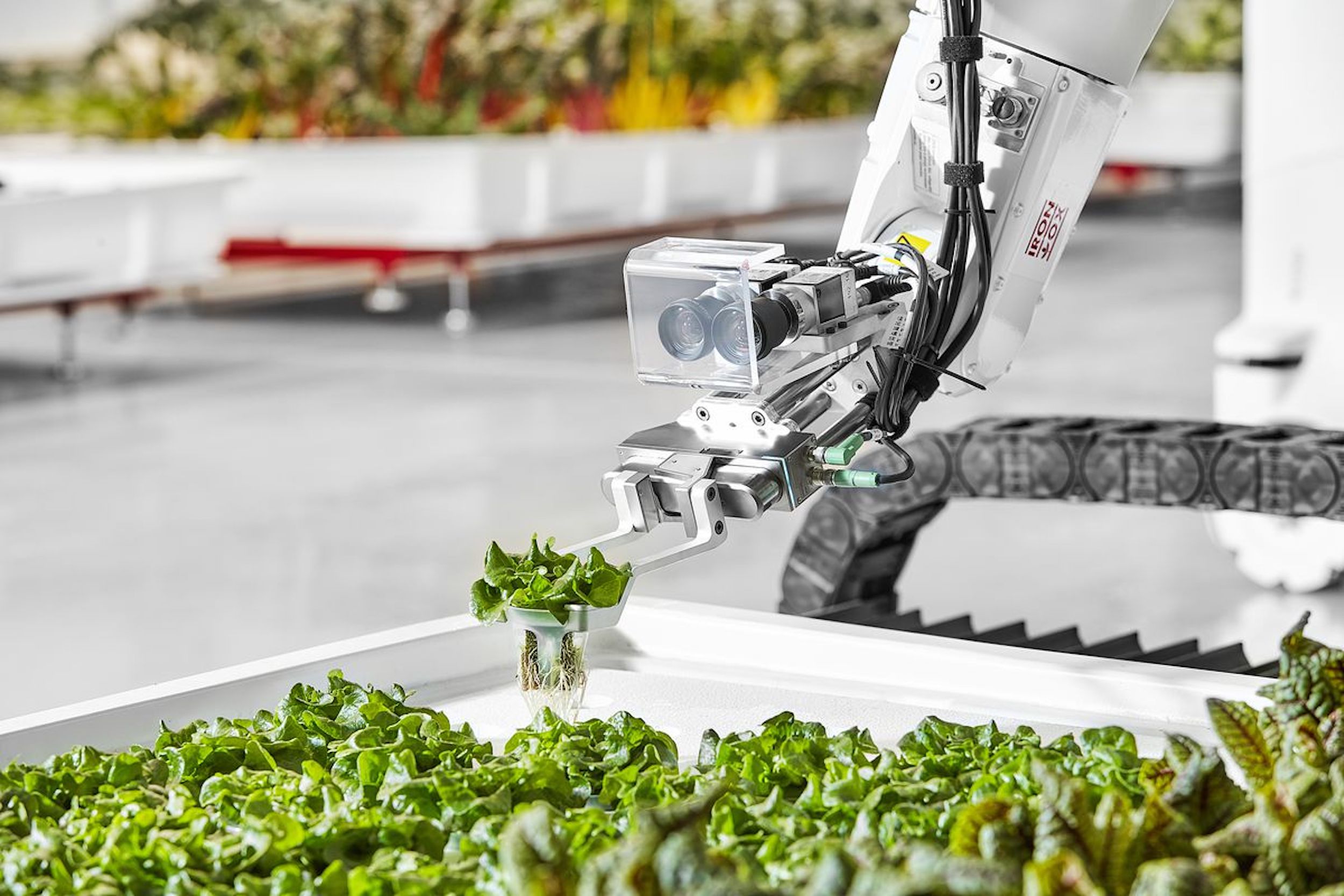
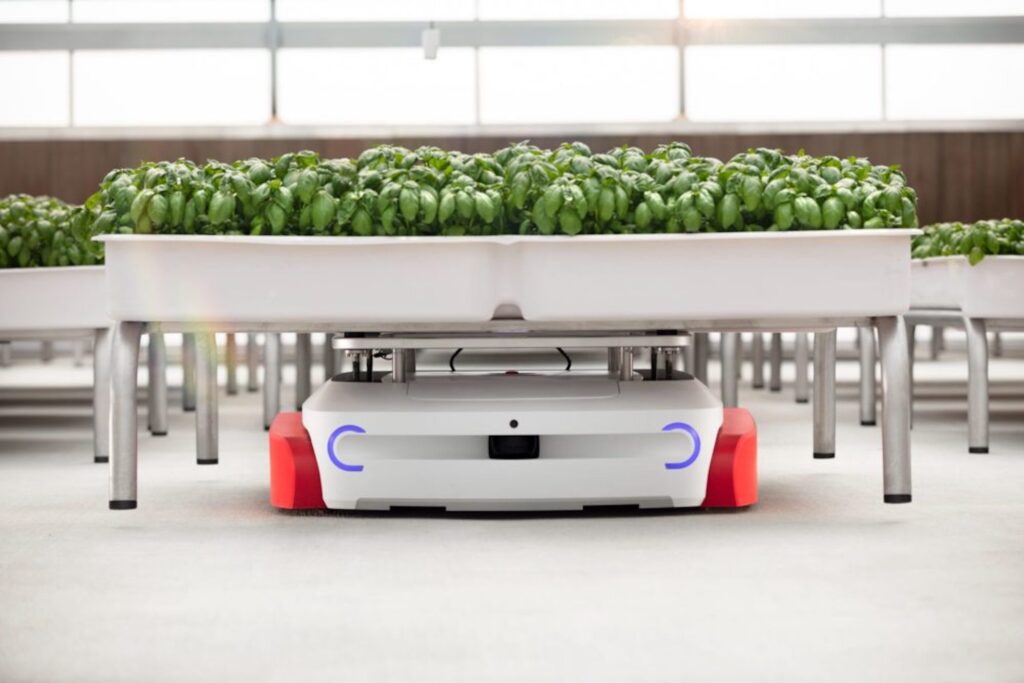
Iron Ox, which has recently closed a $53 million “Series C” funding round, led by new investor Breakthrough Energy Ventures, has been launching autonomous farming since 2018, growing produce in proprietary greenhouses designed from the ground up to mitigate the environmental impacts of agriculture — a data-driven approach backed by plant science, robotics and artificial intelligence.
According to Iron Ox, the closed-loop system optimises plant yield, expands growth cycles and maximizes crop quality. The result is delicious, nutritious, locally sourced fruits and vegetables that currently cost about the same as produce from conventional farms, with substantially lower environmental impacts.
“World-class investors know that humanity’s most important pursuit is to reverse climate change. To get there, we can’t settle for incrementally more sustainable crops — and we can’t ask consumers to compromise on taste, convenience or value,” said Iron Ox CEO and Co-Founder Brandon Alexander. “We are applying technology to minimize the amount of land, water and energy needed to nourish a growing population. The team at Iron Ox will not stop until we achieve our long-term mission of making the produce sector carbon negative.”
Iron Ox grows plants under natural sunlight, leveraging photosynthesis — the 3-billion-year-old process by which plants use energy from the sun to turn atmospheric CO2 into plant biomass, and the most scalable carbon capture technology on Earth.
Iron Ox generates 30x more produce per acre and uses 90% less water than field farms.
It operates farms in Northern California, and earlier this year, the startup broke ground on a new 535,000 sq. ft. indoor farm in Lockhart, Texas.
Consumers can buy Iron Ox food throughout California at Whole Foods, and at other San Francisco Bay Area locations such as Bianchini’s and Mollie Stone’s Markets. Sales outside of California are expected to begin later this year with the first harvest from the new Texas facility.
Photos: Iron Ox