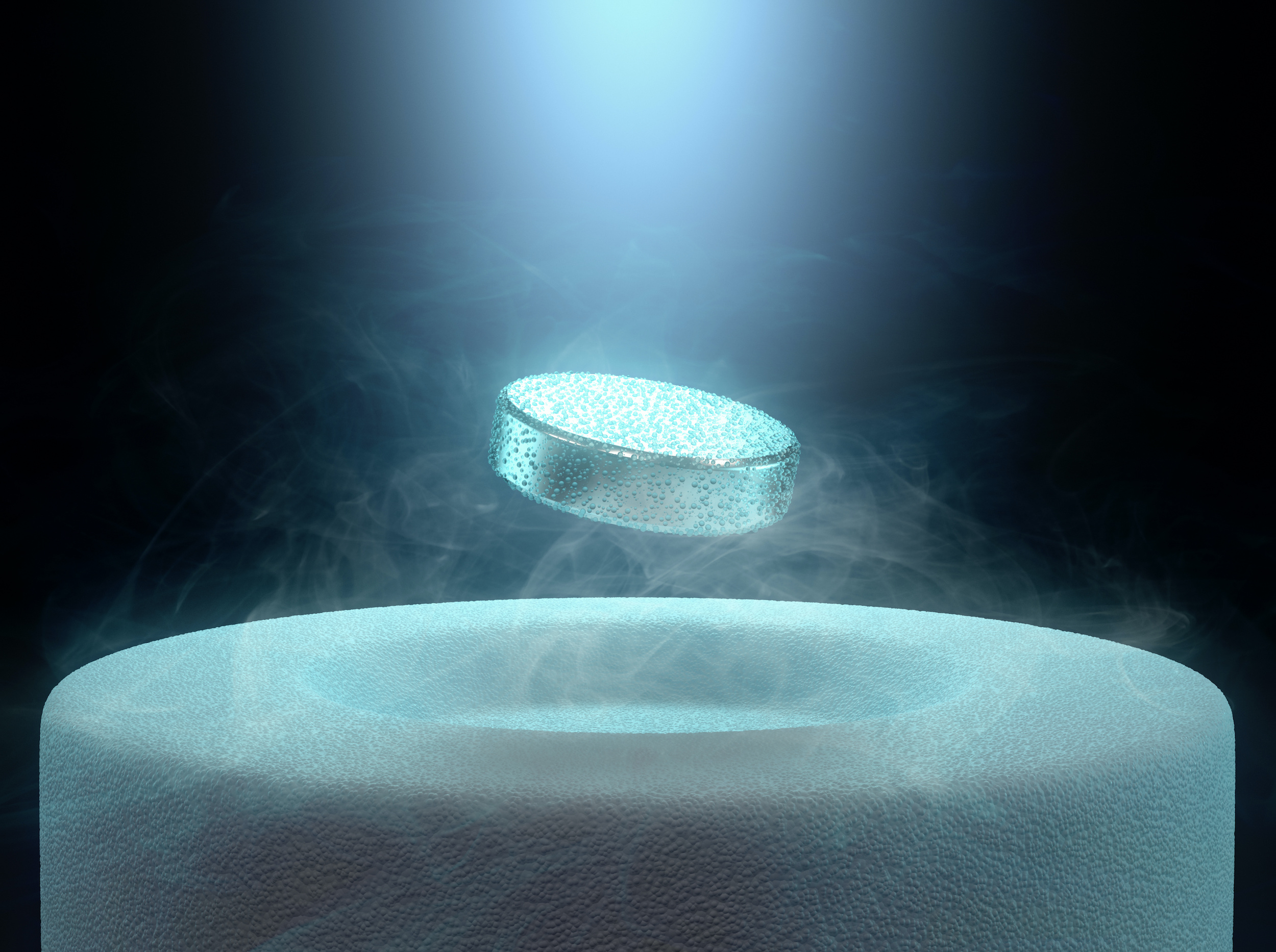

A team at the University of Rochester, New York have made a superconductor at a new record temperature.
Working at a pressure around 70 percent of that found at the centre of our planet, the researchers produced the superconductor by crushing three elements between two diamonds: carbon, sulphur and hydrogen.
To put the levels of pressure performed in this test into perspective, the researchers used pressure equivalent to 2.5 million times of the pressure of the atmosphere at sea level. The team found that hydrogen behaves as if it is under a higher amount of pressure than it really is when sulphur and carbon is added to it, which is exemplified by Dr Ranga Dias of the University of Rochester and who is also one of the leading figures of this study.
“Say you are in a room and you have four walls, one way you can compress yourself is to bring the walls closer and closer, but you can also keep the same size of room and add 10 people into the room, you’ll still feel squeezed.”, said Dias.
According to an article on New Scientist, the temperature at which this particular exercise was conducted (15C) is the highest at which superconductivity has ever been registered.
Looking forward, Dias and his team will now aim to work under lower levels of pressure.
“Take diamond: it is a high-pressure form of carbon, but nowadays you can grow it in a lab with chemical deposition techniques,” said Dias. “It used to require high pressure, but now we can grow it – we may be able to do something similar with superconductors.”