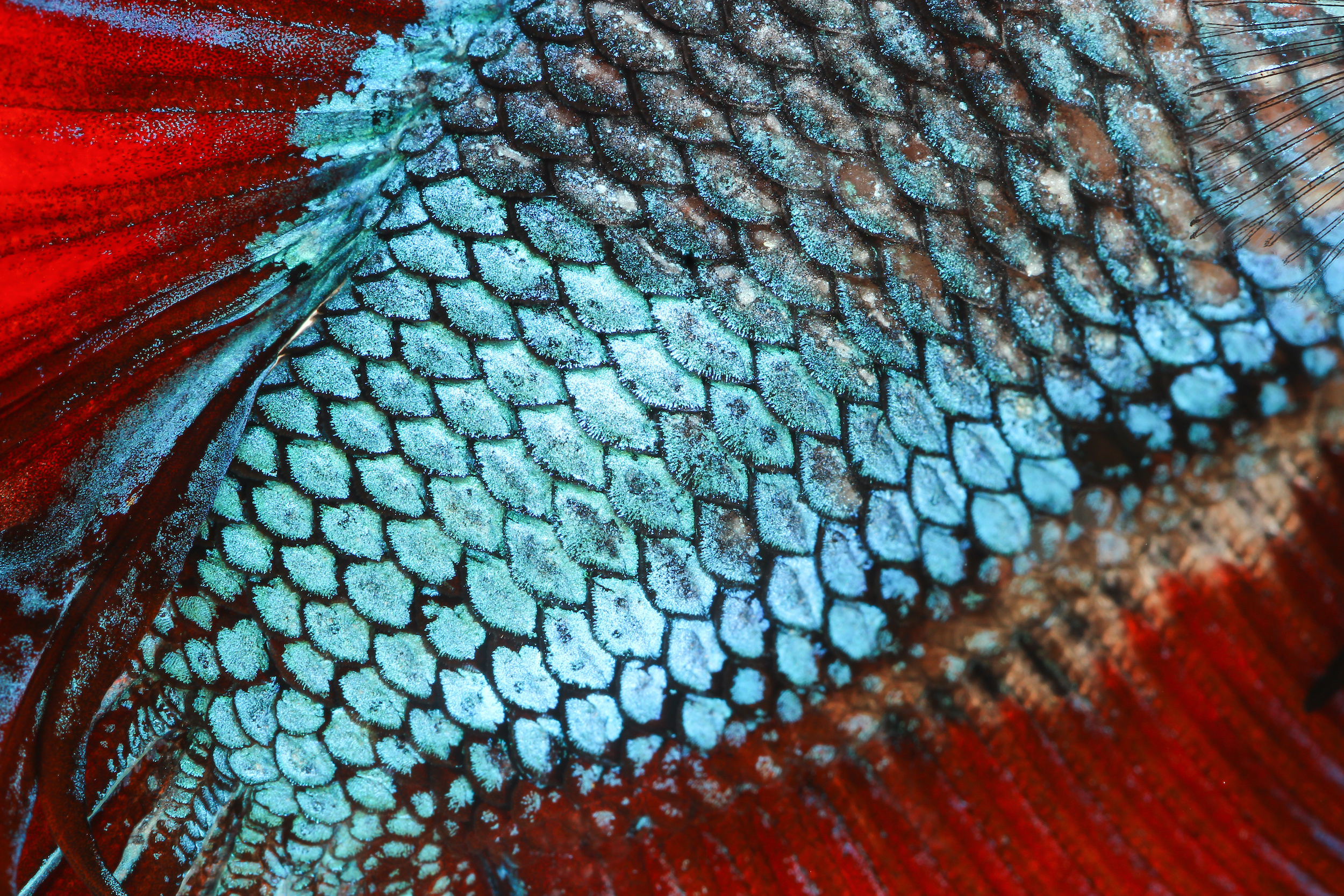

Researchers at City, University of London have discovered how aircraft drag can be reduced with the implementation of fish scale inspired materials.
The researchers, who have been led by Professor Christoph Bruecker, have stated that such materials can drastically reduce fuel consumption for an aircraft whilst also increasing its speed.
According to an article on New Atlas, the team came to this conclusion by using both digital microscopes and computer modelling, which reconstructed the patterns of the fish scales. This initial research concluded that water creates a zig-zag motion when running over the top of overlapping areas of the surface, which in result creates what is called a ‘streaky flow’.
In turn, it has been claimed that the ‘streaky flow’ produced from the zig-zag motion can lower skin friction drag by more than 25 percent.
In addition, further research was conducted by using a specially equipped laminar water tunnel at the University of Stuttgart, Germany. Bruecker and his team placed two plates within the tunnel – one with applied bio-inspired materials that mimicked fish scales alongside another smoother plate.
“The biomimetic fish scale array produces stable velocity streaks in the otherwise laminar boundary layer flow”, explained the study, which has been published on Scientific Reports.