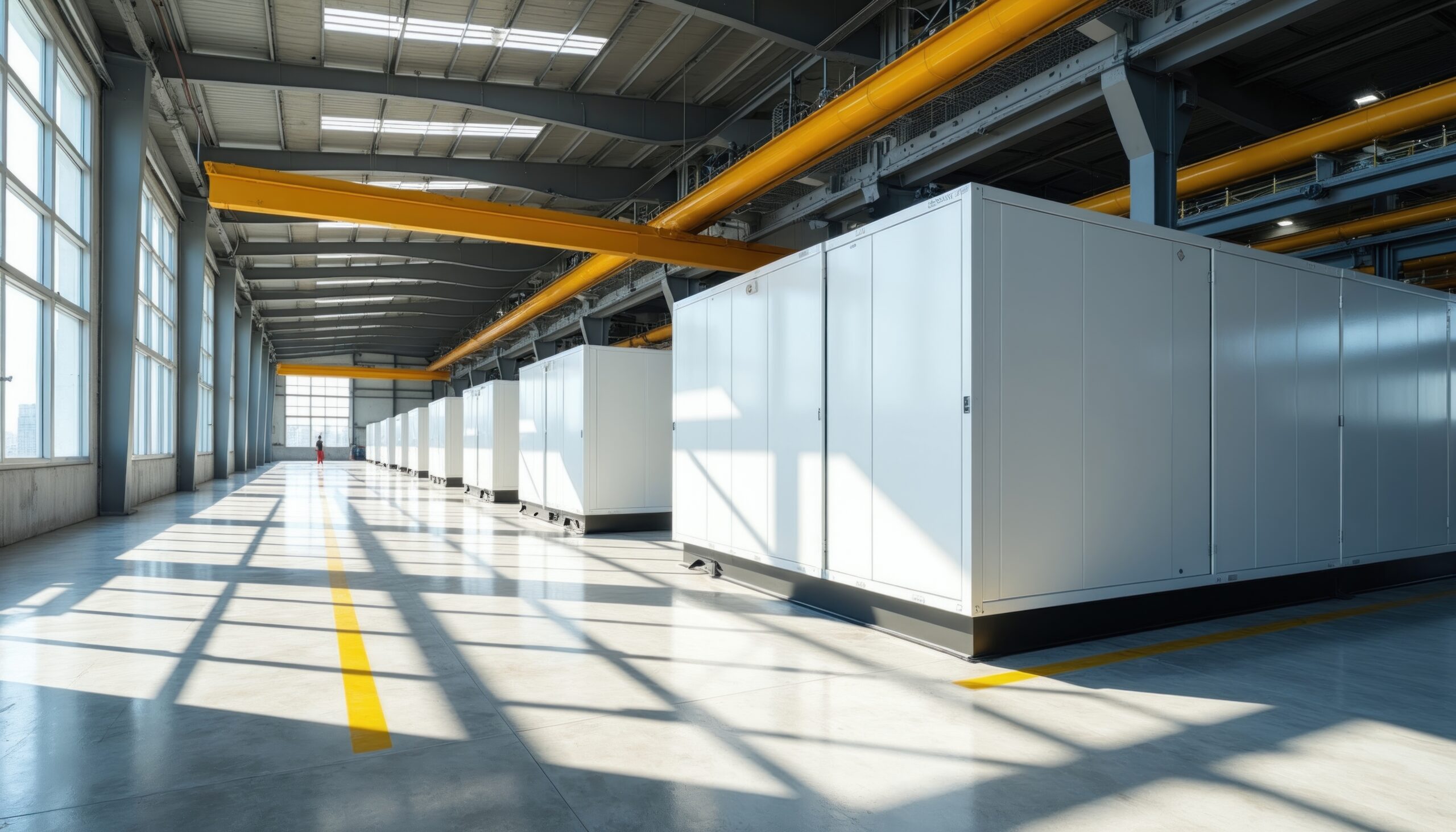

Modern society’s appetite for computing power is expanding at an unprecedented rate. Long before artificial intelligence transformed the tech landscape, data centres were already the invisible engine room of the modern economy, underpinning global banking transactions, logistics networks, cloud computing, and everyday databases. However, the rise of AI hyperscale data centres – facilities that can consume as much electricity as a small town – has pushed global power infrastructure to its limits.
According to McKinsey’s 2025 Global Energy Perspective Report, global electricity consumption is projected to double by 2050, reaching roughly 59,000 terawatt-hours (TWh). While energy growth in Western nations remained relatively flat for decades, the rapid expansion of data centres has triggered a new wave of re-industrialisation. Demand driven by data centres is expected to surge by 17% year-on-year through 2030, with growth in the United States projected to hit nearly 25%.
This sudden surge in localized demand presents a unique challenge for power grids across the United States, Western Europe, and China. Unlike flexible loads, data centres require uninterrupted firm power. A power outage during a high-level calculation or a failure in cooling systems can lead to severe hardware damage and catastrophic data loss. Simultaneously, grid constraints are mounting. Lead times for heavy equipment like transformers and utility-scale generators now stretch into years. In the United Kingdom, energy regulator Ofgem reported that grid connection requests tripled within a single year, climbing from 41 gigawatts to 125 gigawatts.
Adding to the urgency, McKinsey’s findings indicate growing pessimism regarding global decarbonisation timelines, projecting temperature increases between 1.9°C and 2.7°C by 2100. Relying on traditional diesel backup generators to fill the energy gap is prohibitively expensive and environmentally damaging. In addition to carbon emissions, diesel combustion produces nitrogen oxide and toxic particulates, exacerbating local air quality concerns in communities hesitant to host massive digital infrastructure projects. Developers are left with a critical question: how can a facility operate when the computing hardware and market demand are ready, but the electricity grid is not?
A Solid Oxide Solution for Clean Energy
A compelling answer to this energy bottleneck earned the top spot at the Engineering Matters Awards 2026. Judged by representatives from the Institution of Mechanical Engineers and Engineers Without Borders UK, the Net Zero Champion category recognizes technologies, processes, and tools that make a real contribution to reducing carbon emissions. The judges prioritized entries demonstrating significant impact, widespread scope, and the ability to overcome specific technical challenges.
Taking home the Gold Award in the Net Zero category was Ceres Power for its solid oxide fuel cell technology. Unlike conventional generators that burn fuel to produce heat and drive an engine or turbine, a fuel cell uses an electrochemical reaction to turn fuel directly into electricity. Traditional solid oxide fuel cells operate at high temperatures and can run on fuels such as natural gas or hydrogen. Ceres Power’s breakthrough reimagines this process, offering a versatile power source designed specifically to bypass severe grid limitations.
From Motorsport Engineering to Clean Technology
The engineering philosophy behind Ceres Power’s success is rooted in practical hardware design and high-performance precision. Nick Lawrence, Chief Product Officer at Ceres Power, traces his affinity for mechanical engineering back to his academic journey at Oxford University.
“My father was an electrical engineer, so I think from a very early age, I was exposed to a lot of engineering-related projects,” Lawrence recalls. “I always like physical hardware, moving bits, those sorts of things. So, I was naturally drawn to mechanical engineering over electrical and control and civil and all the other ones too.”
After beginning his career on a rotational graduate placement at Rover Group, Lawrence transitioned into motorsport engineering. “I had a hankering to get into the racing industry, and I had an opportunity to join TWR Engines Limited. So, I ended up joining a small team that were involved in designing a next-generation Formula One engine for the TWR Arrows team, and I learned a massive amount from some very experienced people at that time, and that stayed with me ever since.”
By 2012, Lawrence turned his focus toward clean technology and energy storage solutions. This path led him to Ceres Power, where he has spent the last decade advancing solid oxide technology.
Ceres Power originally began in the late 1990s as a spin-out from Imperial College London, founded on the research of Dr. Brian Steele. “Dr. Brian Steele in the late ’90s realized that solid oxide as a technology was going to be really revolutionary for the energy transition,” Lawrence explains. “But he also recognized that the ceramics being used were not going to be necessarily applicable for high volume production. So, he spent a long time developing a steel supported solid oxide cell.”
When the company was formed in the early 2000s, it initially focused on residential applications, creating a one-kilowatt combined heat and power system for homes. Operating on natural gas, this home fuel cell achieved combined efficiencies above 80%. As energy markets evolved – with home heating shifting toward direct electrification and heat pumps – Ceres redirected its focus toward utility-scale and industrial applications, scaling its power technology up to megawatt and multi-megawatt systems suited for data centres and stationary power assets.
Solid Oxide Engineering
Conventional solid oxide fuel cells run at extreme temperatures between 800°C and 1,000°C. While electrochemically efficient, these high temperatures require fragile ceramic plates and delicate high-temperature seals. The extreme heat also demands expensive alloys throughout the rest of the system, making traditional units vulnerable to thermal shock during real-world operational disruptions.
Ceres solved this engineering hurdle by developing a ceria-based solid oxide cell featuring thin ceramic layers printed onto a steel substrate. This structural innovation allows the system to operate at significantly reduced temperatures between 450°C and 630°C – half that of traditional solid oxide cells.
“Ceres’ innovation is really a ceria-based solid oxide cell that’s comprised of really thin ceramic layers printed onto a steel substrate, and that steel substrate gives the product a mechanical strength and durability that’s probably the envy of everyone else in the solid oxide space, because it means you can thermal cycle it quickly, you can emergency stop it without breaking the fuel cell, and you can turn it off and on, and just it’s just generally good at real world abuse,” says Lawrence. “So, you know when you have a plant outage where the transformer goes down, you don’t have to worry about the solid oxide fuel cell system. It can take care of itself.”
This mechanical resilience inspired the product’s commercial name: Ceres Endura.
Lowering operating temperatures provides significant material and cost benefits. Rather than relying on rare high-temperature alloys, the Ceres Endura utilizes standard ferritic stainless steel – the same robust material used in car exhausts and kitchen cutlery.
“So, you can use ferritic stainless steels, the sort of steels that you see in car exhausts and maybe even on the cutlery on your table. So, it’s very cheap,” Lawrence notes. “You don’t need to use sort of high-temperature glass seals. You can get away with very simple automotive type seals too, so it just transforms the materials you can use, and that gives that really results in a lower cost system overall because all of your pipework doesn’t need to be in canals or higher temperature alloys. They can be just common garden stainless steels, and I think the whole offering there allows us to probably, long term, have a materials advantage where we’re probably going to be 30% roughly on production costs lower than those higher temperature alternatives.”
Beyond lower production costs, reduced thermal stress mitigates long-term degradation. While a complete fuel cell system lasts 15 to 20 years, individual stacks are replaced periodically. Ceres Endura operates on a five-year stack replacement cycle, maintaining high performance across its entire operational life and offering a net efficiency advantage of roughly 10% over high-temperature competitors at end of life.
Flexibility is another key technical feature. Solid oxide technology is intrinsically reversible: operated in reverse with electricity and steam, the fuel cell functions as an electrolyser to produce hydrogen. Furthermore, while the Ceres Endura can run on natural gas today to supply immediate power needs, it is fully capable of operating on hydrogen or other low-carbon fuels as sustainable fuel infrastructure becomes available.
Strategic Infrastructure, Modularity, and Scalability
The ability to deploy clean, firm power rapidly makes solid oxide fuel cells a vital asset in overcoming power grid delays. Where traditional grid connection requests can take five to seven years, modular fuel cell systems can be installed on-site within months. Because fuel cells generate power electrochemically without combustion, they eliminate nitrogen oxides and particulate emissions at the point of generation.
Ceres technology is already demonstrating its capabilities globally, including through a 1-megawatt demonstrator project at Shell’s Technology Centre in Bangalore, India. To meet expanding market demand, Ceres focuses heavily on manufacturing scalability through global partnerships, such as a factory in Doosan, South Korea, which brought 50 megawatts of capacity online within a single year.
For Lawrence, unlocking the full potential of solid oxide power requires a shift in how engineers and infrastructure planners view power generation assets.
“I think solid oxide as a class is a very different type of power generation asset to traditional generators, and I think as a result of that, because it’s highly modular, you almost need to train industry to think about it in a different way in terms of how you best use it,” Lawrence explains. “If you think about a large generator to produce reliable power from a large generator, you need you probably need a second large generator or backup generation next to that large generator to achieve high availability power for critical infrastructure applications, whereas actually, the opportunity of solid oxide is because it’s highly modular. You don’t need to oversize that system very much to achieve really high availability power.”
This inherent modularity aligns perfectly with modern data centre construction, which scales incrementally. “As I build out a 10-to-100-megawatt data centre, I can install my solid oxide system in 10-megawatt blocks, but I don’t have to stop there. If those power needs change at all, I can just add more blocks. And if the power need moves or changes, I can move them around too.”
Furthermore, the thermal robustness of the Ceres cell enables active power cycling. Facilities utilizing on-site solid oxide power alongside eventual grid connections can dynamically adjust fuel cell output to balance fluctuating renewable power sources, integrating solar and wind seamlessly without risking equipment damage.
Celebrating Innovation Across the Decarbonisation Sector
While Ceres Power claimed the Gold Award, the 2026 Engineering Matters Awards highlighted a diverse range of innovative technologies driving the clean energy transition across industry sectors.
The Silver Awards recognized five outstanding initiatives: Naked Energy for solar thermal technology, Nova Pangaea Tech for Refnova, SP Energy Transmission (in partnership with Network Rail, University of Leeds, Ricardo AEA, and GE Power Conversion UK) for flexible railway energy hubs, Superdielectrics for safe, low-cost aqueous zinc batteries for grid management, and Thermal Earth for its mine water heating scheme.
The Bronze Awards honoured eight projects: ABB for its LV Titanium motor, Bam for the Element 1 project, EvoPhase, KwikFab, and the University of Birmingham for The Birmingham Blade, Found Energy for extracting carbon-free energy from aluminium, Geosolutions Leeds for its geothermal energy Living Lab, Intelligent Energy for hydrogen fuel cell products, Minimass for minimal construction techniques, and ORIS Materials Intelligence for its highway carbon-reducing AI platform.
Together, these award-winning breakthroughs demonstrate the breadth of engineering ingenuity working to solve the global climate challenge. From modular solid oxide fuel cells unlocking stuck digital infrastructure to innovative energy storage and material efficiency, the 2026 Engineering Matters Awards underscore that the tools for a sustainable, net-zero future are being built today.