
For much of the history of modern civil engineering, the answer to environmental problems has been to build something: a wall to hold back a river, a channel to move water away, or a treatment plant to deal with pollution.
That approach has delivered enormous benefits. But as climate change puts greater pressure on infrastructure, engineers are increasingly looking at what happens when we work with natural systems rather than simply trying to control them.
That is the thinking behind nature-based solutions (NBS), which use natural processes to address challenges such as flooding, water management and biodiversity loss. Rather than treating the environment as something separate from an engineering project, NBS brings it into the design itself.
Dr Laura Liddaman, Associate Director of Nature Based Solutions at AtkinsRéalis, has worked across surface water management, natural flood management, hydraulic and hydro-geomorphological modelling and flood risk assessment. She sees NBS as a way of bringing those disciplines together.
“Nature based solutions was kind of the next that kind of pulled it all together. It took all my experiences from all the different areas and just pulled it all together,” she explains.
That multidisciplinary approach is important because natural systems do not respect the boundaries between engineering disciplines — or between individual infrastructure projects.
Thinking beyond the individual asset
Flood protection provides a good example.
A traditional response to increasing flood risk might be to make a flood wall higher or install larger pumps. These measures can be effective, but they do not necessarily address what is happening elsewhere in the catchment.
“I think what’s happened is that there’s been this real shift now in in thinking around how you mitigate, you protect, how do you build better resilience? Which isn’t around just building bigger walls, bigger flood defences,” says Liddaman.
Instead, engineers are increasingly looking at how water moves through an entire catchment and whether interventions upstream can reduce the pressure on infrastructure downstream.
“If you imagine there’s a flood scheme that’s been approved, and what we do is we build that flood wall higher, and we build pumps in our network that can move water away from the system bigger,” Liddaman says. “And, you know, we keep building bigger, and then two winters later, another intense storm hits, and the water finds a way, and it beats those defences.”
The problem, she argues, is that focusing on the individual asset can mean missing an opportunity to change the behaviour of the wider catchment.
“So, what the nature-based solution is doing is looking at the catchment as a whole.”
That matters because an intervention in one location can have consequences somewhere else.
“Because what you do in one individual place might have a knock-on effect somewhere else,” Liddaman says. “And if you’re not looking at things in a connected landscape, you could just shift one problem to it to another area.”
Understanding those connections requires expertise in how rivers and their surrounding landscapes work.
Dr Hannah Joyce, Senior Fluvial Geomorphologist at AtkinsRéalis, describes her job in deliberately simple terms.
“My role basically entails looking at river systems and the floodplains that they’re connected to and how they sit in the wider catchments and looking how we can improve the functioning and the habitats within them for biodiversity,” she says.
“So, I sometimes tell people, I’m a doctor of rivers. I make rivers healthy, healthy again.”
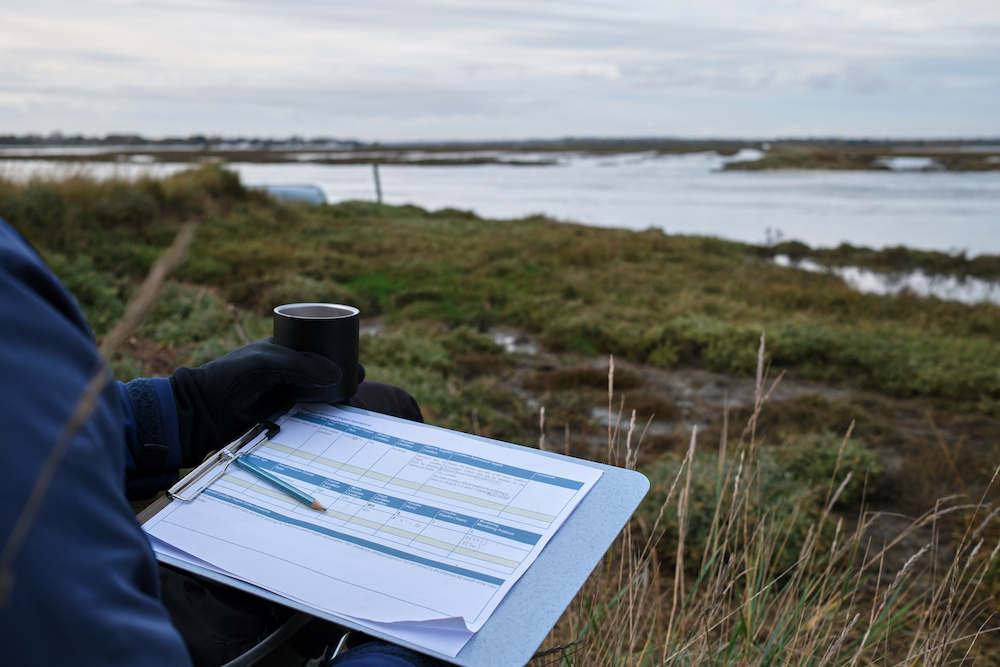
Her work can involve desktop studies, site surveys, engagement with landowners and monitoring habitats. In urban areas, there may be relatively little space to work with, but even small changes can help restore some of the functions of a natural watercourse.
In rural areas, the scale can be much larger. Working with landowners can create areas where water is temporarily stored during heavy rainfall, reducing flood peaks while allowing agricultural land to continue to be used.
From environmental enhancement to infrastructure
The idea of restoring wetlands, rivers and other natural environments is not new. What has changed is the way those interventions are being considered as part of infrastructure planning.
Joyce says the NBS approach has helped bring different objectives together.
“I think how it has changed in industry is that it has driven a more integrated approach for delivering environmental enhancements and improvements, and not just focusing on the environmental benefits, but some of the wider benefits in terms of flood risk reduction, biodiversity, climate adaptation, social value, benefits that nature-based solutions can have.”
That integration is becoming increasingly important as environmental requirements are incorporated into infrastructure and development.
In the UK, measures such as Biodiversity Net Gain are changing the way developers have to think about ecological impacts. At the same time, the poor ecological condition of many rivers means there is a substantial amount of work to do.
“In terms of the status of water courses, I think it’s something like 15% of English water courses are at good condition,” Joyce says.
“Now that means that there’s a significant percentage that aren’t at good condition or meet these good ecological health standards that are required by that legislation.”
For Joyce, the challenge is therefore less about whether there is an appetite for NBS and more about delivering it at scale.
“I think delivering nature-based solutions at scale in the UK is the challenge, but we have the enthusiasm and definitely people committed to delivering it.”
Putting nature to work
There is no single nature-based solution. The appropriate intervention depends on the characteristics of the catchment and the problem that needs to be addressed.
Within a river channel, for example, engineers can restore connections between the river and its floodplain. Lowering banks that have been artificially steepened can allow water to spread onto the floodplain during high flows rather than forcing it through the channel.
“So, when we get high flood events, we can store water on the flood plains, rather than simply pushing it through the system and moving issues downstream,” Joyce explains.
Elsewhere, leaky woody barriers can slow water down and reduce flood peaks. In the upper catchment, features such as field bunds and tree planting can help retain runoff and encourage infiltration into the soil.
One example is the Evenlode Landscape Recovery Scheme in the Cotswolds, where AtkinsRéalis worked with farmers across around 3,000 hectares to introduce interventions intended to reduce flood risk at a wider landscape scale.
There can also be a maintenance advantage to using natural processes.
At the 600-hectare Spains Hall Estate, AtkinsRéalis used its Natural Capital Studio to examine different approaches to natural flood management, including artificial leaky dams and the reintroduction of beavers.
A man-made structure needs to be inspected and maintained. A beaver dam, by contrast, is maintained by the animals themselves.
“Things, even when you’re using man-made natural materials and things like that, they you know, they still need maintaining a leaky dam is that you put in a man-made one is still going to drop down, it’s still going to change over time and eventually not perform to how it is,” Liddaman says.
“The beavers will actually repair it themselves. So, they will maintain their own structures.”
None of this means that conventional engineering is disappearing.
In many cases, the most effective solution is likely to combine the two approaches. Natural flood management upstream can reduce the amount of water reaching a downstream flood defence, for example, potentially reducing the pressure on that engineered asset.
The question is therefore not whether green infrastructure should replace grey infrastructure. It is what combination of approaches makes most sense for a particular problem.
Changing the engineering mindset
One of the difficulties is that engineers are accustomed to designing systems whose behaviour can be calculated and controlled.
A concrete structure has defined dimensions and known characteristics. A river, wetland or beaver dam is rather less predictable.
That can make it harder to build confidence in nature-based approaches, particularly when engineers and asset owners are responsible for managing risk.
“How do you build, break down those myths? How do you build confidence in the solution that you pick?” Liddaman asks.
“And I think there’s a really big piece in that, in that paper that I hope came out, was it’s not one or the other. It’s not saying a traditional, engineered solution should be swapped for a nature-based solution. It’s saying, what is the best solution right now?”
That shift needs to happen early in the design process. Trying to add a nature-based intervention after a project has already been designed around a conventional engineering solution can be difficult.
Liddaman also argues that engineering education needs to reflect the changing role of nature in infrastructure.
“Talking to sceptical engineers, like, how do we change that mindset that we needed to, kind of, you know, help try and influence things like our engineering syllabuses,” she says.
“One of the things that it is changing, like people understand that nature-based solutions and working with nature is the way to go, that It has its benefits, but it still doesn’t have that equal seat at the table in discussions.”
Ultimately, she believes the industry needs to become more willing to try different approaches.
“We need companies and we need engineers to be brave, to take the plunge, to do it,” she says.
“And again, it’s not about being pro nature and anti-engineering. It’s about, as I said, finding the right tool, the right solution for the job that you are doing, and being confident to go, I can do this using a different approach to what we do.”
That may be the most important change. Nature-based solutions are not an alternative to engineering. They are another set of tools for engineers to use.
For Joyce, success would mean seeing more projects move from individual demonstrations towards practical, large-scale delivery, while bringing communities into the process.
“I think what would success look like is the delivery more delivery of these nature-based solution schemes having a kind of a practical and proportionate approach to delivering them, in terms of that consenting view the scale of the scheme, but also getting communities involved, involved in helping,” she says.
Communities may not be able to build a river restoration scheme themselves, but they can contribute through monitoring and stewardship.
The wider shift is already underway: from seeing nature as an environmental constraint around an infrastructure project to considering natural processes as part of the infrastructure itself.
For engineers, that does not mean abandoning concrete, steel or pumps. It means asking a broader question at the start of a project: what can the landscape do for us?
In an era of increasing climate pressure, the answer may be that some of the most resilient infrastructure is the infrastructure that works with nature rather than against it.