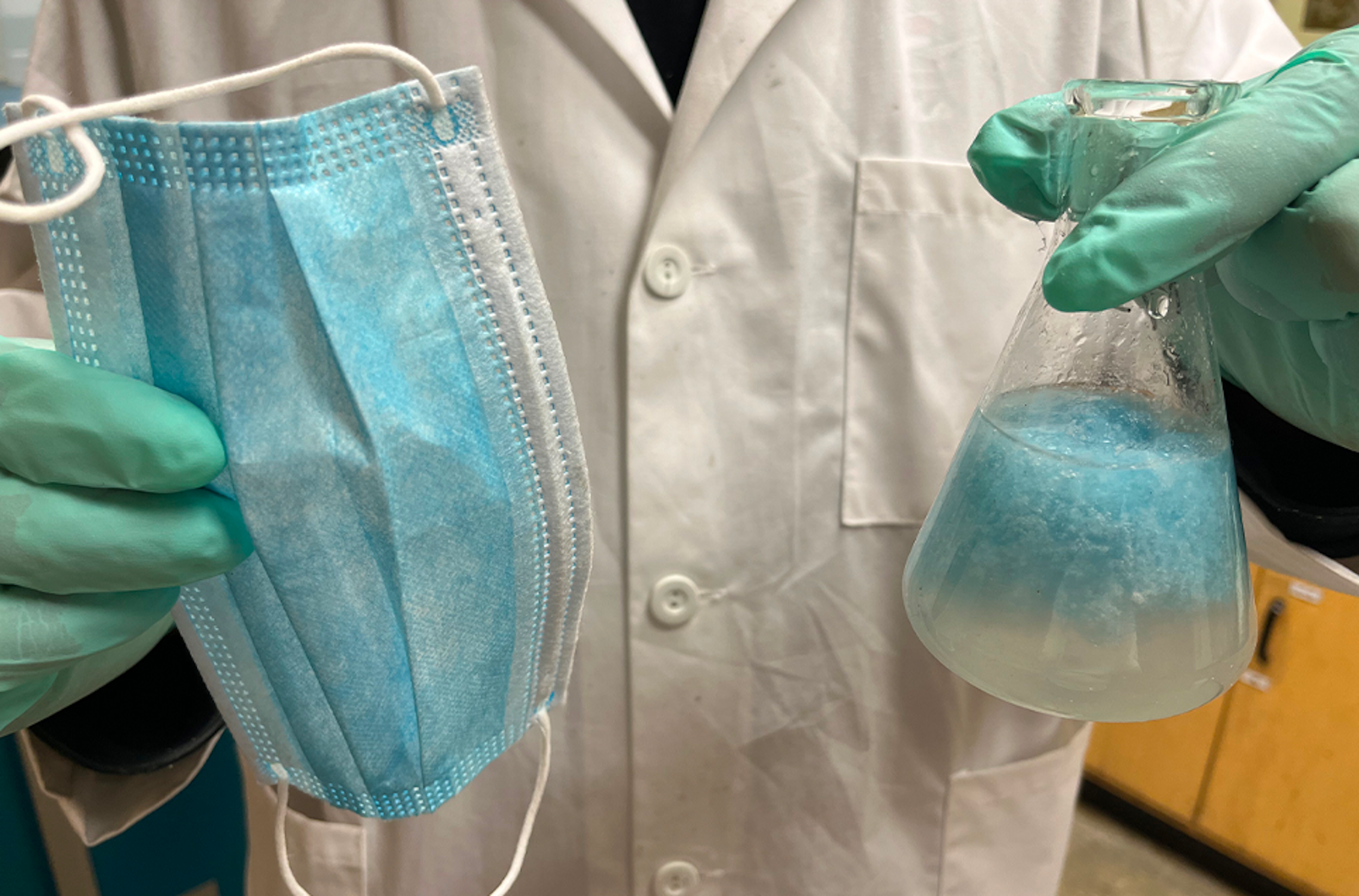

A new study released by researchers from Washington State University shows that using waste materials from single use masks can improve the strength of a mixture by 47%.
With billions of masks being thrown away during the pandemic, which can remain in the environment for decades, it is important to find uses for masks after they have been worn.
“These waste masks actually could be a valuable commodity if you process them properly,” said professor Xianming Shi, the papers co-author and interim chair of the Department of Civil and Environmental Engineering. “This work showcases one technology to divert the used masks from the waste stream to a high-value application.”
Disposable masks are made up of a mix of polyester fabric and an ultra-fine polypropylene for the filtering layers.
The process involved removing the metal as well as the cotton loops and cutting the mask into pieces between 5mm and 30mm in length. The mask fibres were then mixed into a solution of graphene oxide before being added to Portland cement, the most commonly used type of cement globally.
The mask microfibres are able to dissipate the fracture energy that contributes towards crack in concrete. Adding microfibres can extend the life of concrete and reduce both cost and emission levels, which is important as cement production is responsible for 8% of total global carbon emissions.
The research team plans to further test mask microfibres impact on protecting concrete from frost bite and commonly used road de-icing chemicals. They also plan to test the effectiveness of other polymer materials like those found in clothing.