
The incorporation of a new material called ferrocene into solar cells may result in much cheaper and more flexible solar panels according to a new study released by a team of researchers from Imperial College London and City University of Hong Kong (CityU).
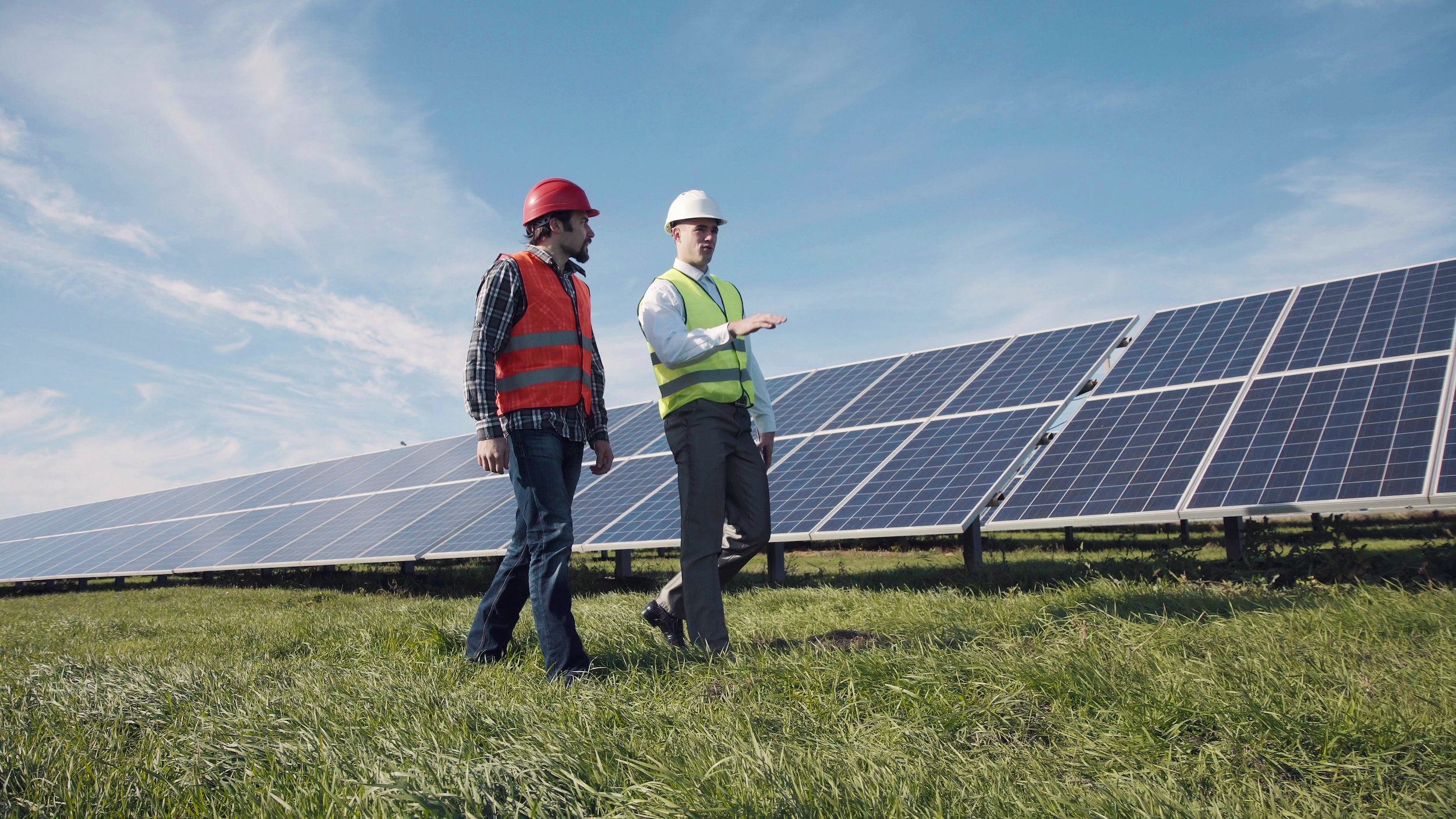
Traditionally solar panels have been made of silicon. While silicon is a very efficient material for converting solar energy into electricity, it is also very expensive and can only be made into rigid panels.
Perovskite solar cells, which can be printed from inks, has been an area of interest for many trying to reduce the cost as well as increase the flexibility of solar panels. However they have remained unpopular compared to silicon cells due to their lower efficiency and lack of durability.
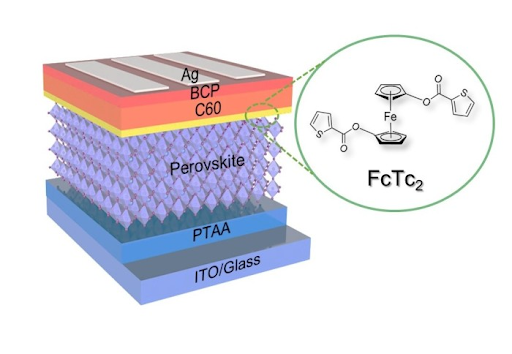
The new study released by researchers at CityU has shown that adding a layer of ferrocenes, that have been designed by the team at Imperial, into perovskite solar cells can result in efficiency levels of 25%. This is very close to the levels produced by silicon cells.
Co-lead author Professor Nicholas Long, from the Department of Chemistry at Imperial, said: “Silicon cells are efficient but expensive, and we urgently need new solar energy devices to accelerate the transition to renewable energy. Stable and efficient perovskite cells could ultimately allow solar energy to be used in more applications – from powering the developing world to charging a new generation of wearable devices.”
Ferrocene is an organometallic compound, with an iron atom at the center surrounded by rings of carbon. It possesses strong stability, it is unaffected by air and water and can be heated to 400°C without causing decomposition.
The CityU research team experimented with attaching different chemicals to the ferrocene’s carbon rings. This further improved the stability of perovskite solar cells, allowing the cells to maintain 98% of initial efficiency after operating a maximum power for 1,500 hours.
Ferrocene’s structure also gives high levels of electron richness which allows more electrons to travel through the perovskite layer, this is what improves the solar panels efficiency. Lead researcher Dr Zonglong Zhu from CityU said: “We are the first team to successfully boost the inverted perovskite solar cell to a record-high efficiency of 25% and pass the stability test set by the International Electrotechnical Commission.”
The joint Imperial College London and City U team have patented their design and are hoping to license it out to get their new devices to market. In the meantime they plan to continue experimenting with different chemicals in the carbon rings to try and further improve the solar cells efficiency and stability.