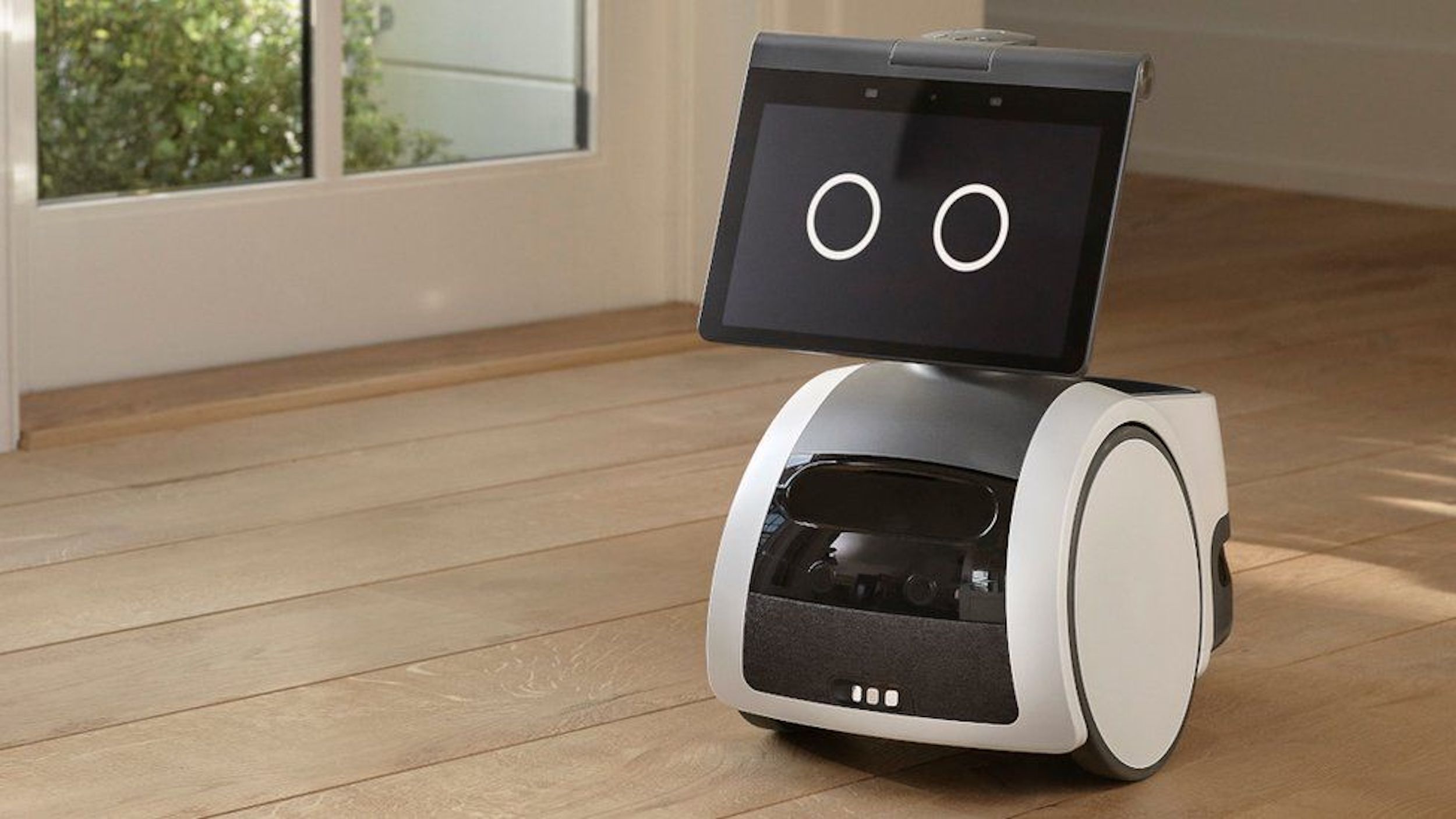

“Customers don’t just want Alexa on wheels,” said Dave Limp, the head of Amazon’s devices at a company event on Tuesday. Then, according to the New York Times, he proceeded to introduce a home robot named Astro that looked a lot like Alexa on wheels, costing around US$1,000.
Other publications were less flattering with the Independent quoting one of Astro’s developers as saying the robot is a “privacy nightmare” that will “throw itself down the stairs”.
Regardless, Amazon believes that in five to 10 years customers will depend on robots in their homes. But will Astro be the one still around in a decade or will others jump on the bandwagon and take home-AI to further heights?
According to Amazon, Astro is “a helpful, capable robot for your home”. Designed to help customers with a range of tasks like home monitoring and keeping in touch with family, Astro brings together new advancements in artificial intelligence, computer vision, sensor technology, and voice and edge computing in a package that’s designed to be helpful and convenient.
Amazon says that it built Astro with a focus on safety, privacy and customer control. The company claims that Astro has clear indicators when streaming features are active, has a microphone/cameras off button, and allows for ‘out-of-bound-zones’ to be programmed into its system.
Although Amazon touts the robot’s ability to dance, leaked documents claim there are numerous defects with it including poor facial recognition; an inability to sense stairs; and be prone to breaking.
According to The Verge, a leak from Amazon somewhat recontextualizes Amazon’s invite-based rollout. “You currently can’t just buy the robot, you have to request an invite, a process which requires filling out a survey to indicate whether your house would be a good fit for Astro (which includes a question about what style stairs you have). It’s possible Amazon is trying to put these bots into the best case scenario, to see if they can even survive that.”
Amazon responded to The Verge’s article with this: “These characterizations of Astro’s performance, mast, and safety systems are simply inaccurate. Astro went through rigorous testing on both quality and safety, including tens of thousands of hours of testing with beta participants. This includes comprehensive testing on Astro’s advanced safety system, which is designed to avoid objects, detect stairs, and stop the device where and when necessary.”