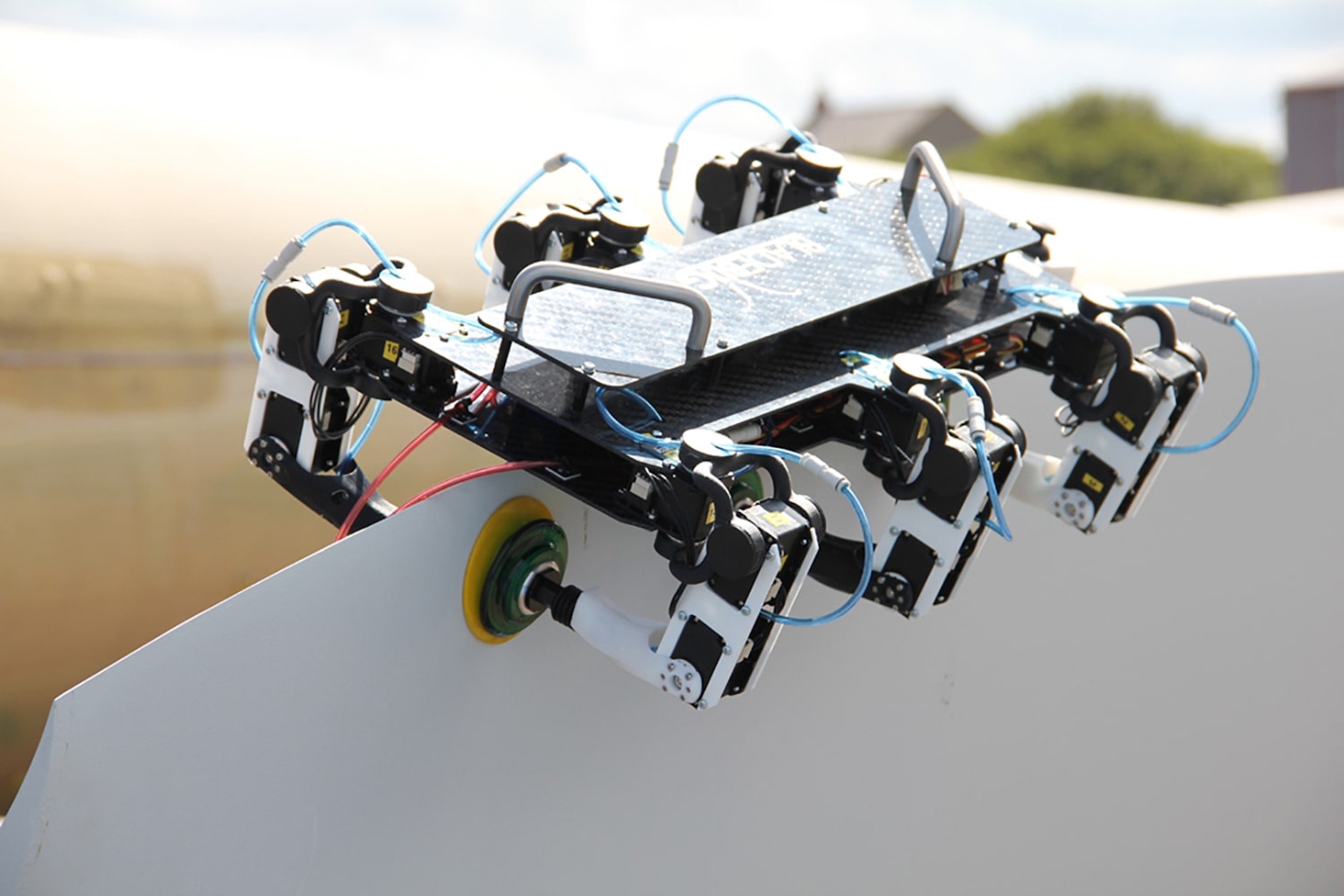

Robotics and autonomous systems (RAS) are set to become a critical component in the safety, cost reduction and efficiency of offshore wind farm operations, according to a new report from ORE Catapult and written by analyst Gavin Smart.
They will play a key role in the safe and cost-effective operation of increased numbers of offshore wind turbines, operating in deeper waters and more challenging conditions further from shore. The potential for robotics is huge, with applications across the offshore wind value chain, including site survey and consenting, installation, operations and maintenance and decommissioning. This presents significant opportunities to technology developers, SMEs and innovators; not just to serve the rapidly growing UK market but also to export innovation to offshore wind markets around the world.
“Indeed, we believe that adoption of robotics and autonomous systems by the wind sector will be vital to achieving the renewables expansion needed for Net Zero,” says Smart.
There are three compelling reasons why:
1. To achieve our net zero targets, the UK’s offshore wind capacity will need to increase more than sevenfold by 2050. That means pushing operations into ever-deeper, more remote and more treacherous waters with narrower weather windows for safe human access.
2. Robotics can take on the routine maintenance tasks such as scouring the surfaces of thousands of blades for critical cracking and erosion (there are 30,000 currently at UK wind farms – onshore and offshore) or checking the approximately 10 million bolts at these farms for loss of tension and integrity. Ultimately, this will mean better pre-emptive maintenance and control over these essential net-zero assets.
3. Finally, with better pre-emptive maintenance, we can extend the lifetime of components and turbines at sea, helping the industry progress to a circular, zero-waste economy.
According to Smart, he estimates that the UK offshore wind O&M market for RAS will double in size from £55m in 2030 to £110m in 2040, with a further 70% growth to £190m by 2050. “Our estimates show the global export market for RAS in offshore wind O&M growing by 160% from £285m in 2030 to £750m in 2040 and by a further 60% by 2050 to £1.2bn.”