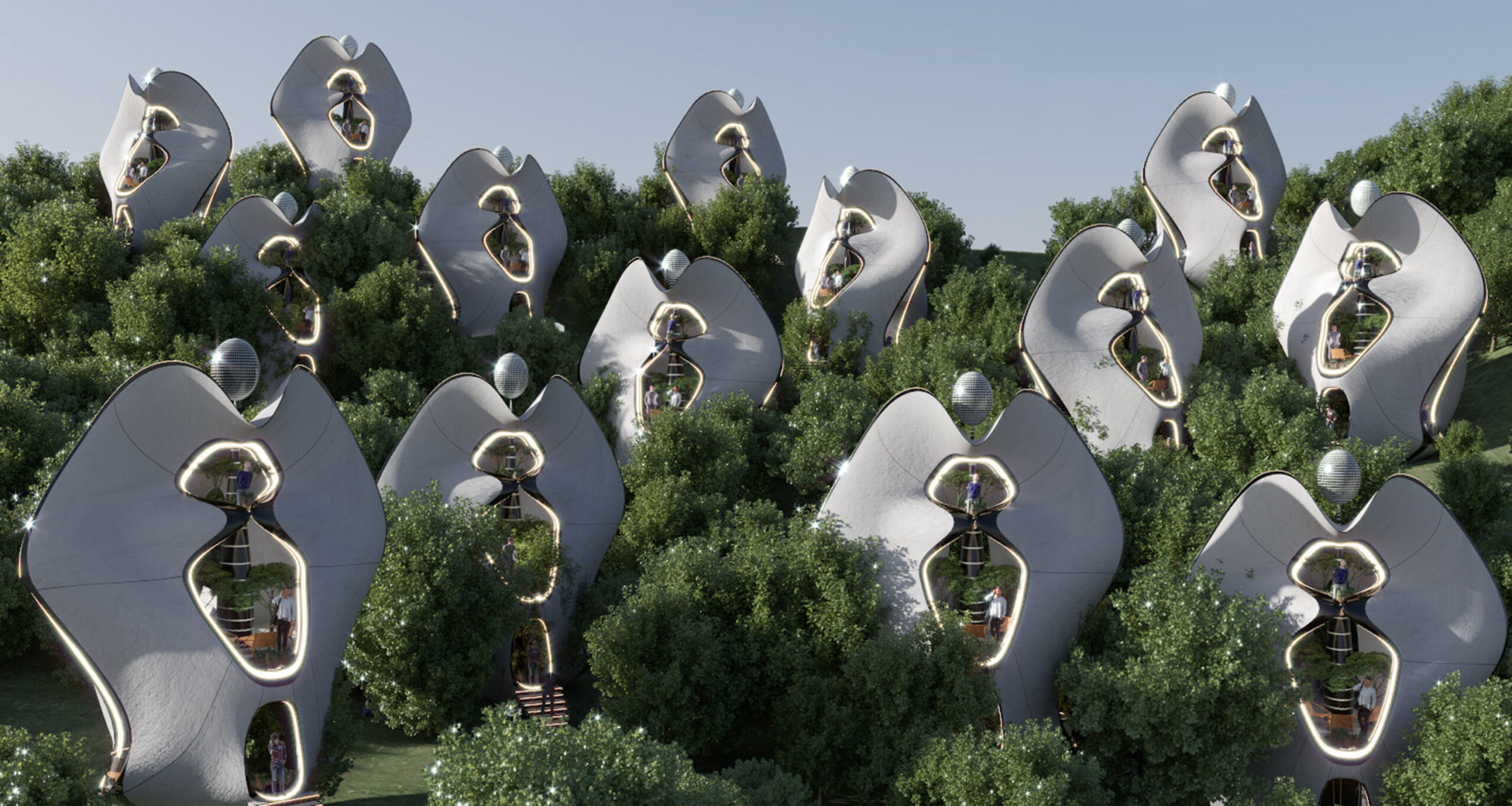

MASK Architects has designed the world’s first steel 3D printed structure of modular houses for Nivola Museum’s visitors, tourists and artists in Orani, Sardinia.
The studio is the first architecture and design studio in the world to use a steel 3D-printed “exoskeleton” construction system that supports and distributes all the functional elements of the building, using their new solution of construction technique which they called “EXOSTEEL”.
The house is composed firstly by a hollow central column inserted for one-third of its length into the ground and by various organic branches that support the three floors of the building. On each floor a perimeter frame divides and supports the facades made up of panels modelled to follow the organic shape of the house.
Interesting, the architects have not included stairs for the buildings, instead encouraging residents to use the “natural inclination of the terrain and environment” to move from floor to floor.
“This site that we have situated our development on is a sloppy mountain side that will be transformed into staggered sections that will provide different levels for the modules to be situated in,” said MASK Architects. “Surrounded by natural scenery, we want our development to be self-sustainable working in harmony with nature. Sardinia is known to have winds and sometimes it can be very strong, due to the winds, we have had to manage our modules and design them in a way to allow wind to pass through. We have created voids either side where the wind can pass through. It also allows us to create openness throughout the modules to make sense of feeling together with nature.”
According to the architect firm, “Madre Natura” is a sustainable development of modular system style development in natural settings, inspired by the work of Costantino Nivola.