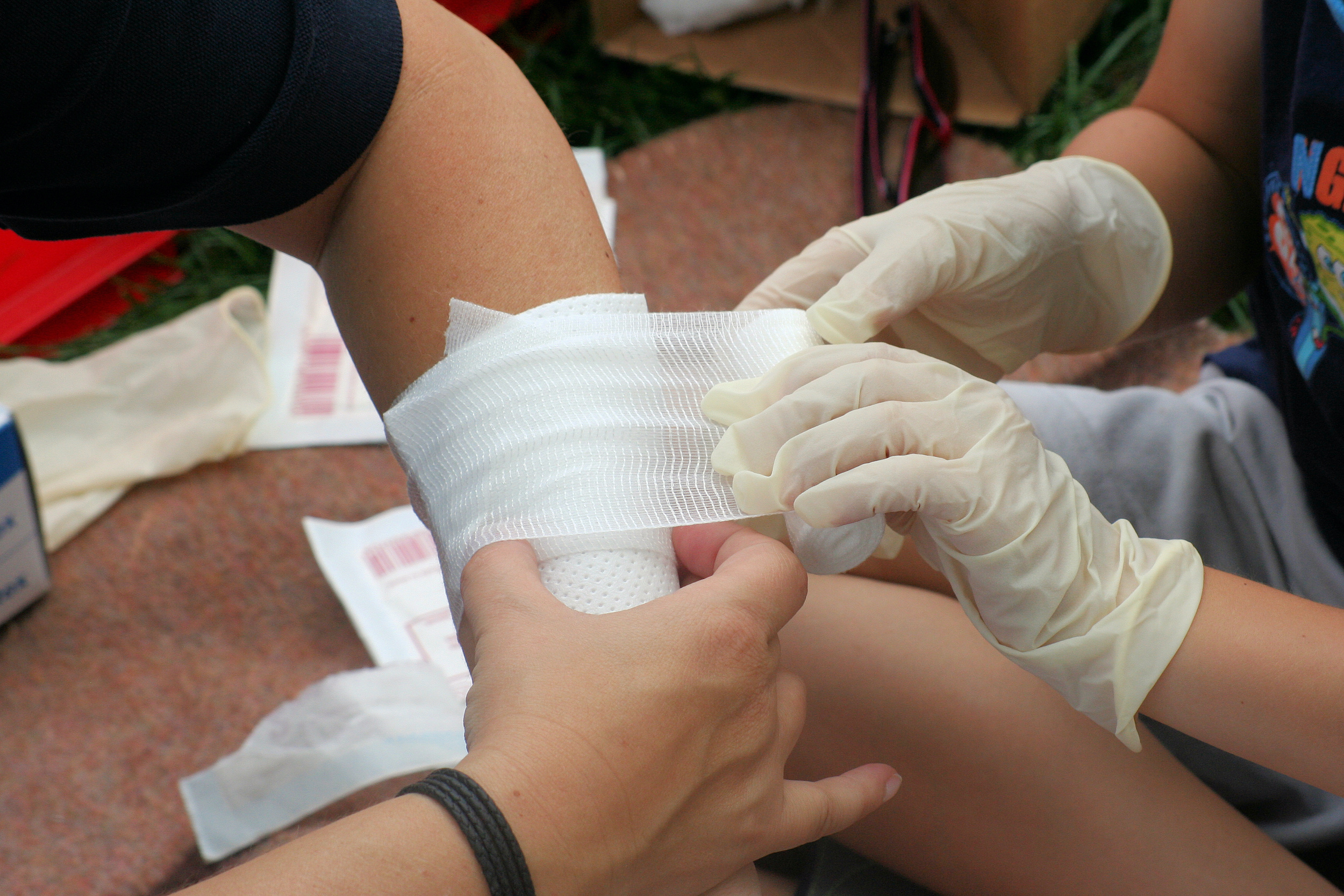

A team of researchers from Australia have designed smart wound dressings that glow to track the healing process.
Produced by a team of scientists and engineers from RMIT University in Melbourne, the dressings are nanosheets comprised of magnesium hydroxide that react to changes in pH according to an article on The Engineer.
“Currently the only way to check the progress of wounds is by removing bandage dressings, which is both painful and risky, giving pathogens the chance to attack,” said Dr Vi Khanh Truong, who is a Vice-Chancellor’s Postdoctoral Fellow at RMIT.
“Being able to easily see if something is going wrong would reduce the need for frequent dressing changes and help to keep wounds better protected.”
The magnesium hydroxide nanosheets act as ideal sensors according to the team as infected wounds are more alkaline, whereas healthier skin is more on the acidic side of the pH scale.
In addition, further laboratory tests showed that the sheets were harmless towards human cells, whilst also being able to eliminate pathogens such as Candida auris – a yeast-based fungus.
Truong and the team believe that mass production of these nanosheets will be straight-forward to perform in the near future.