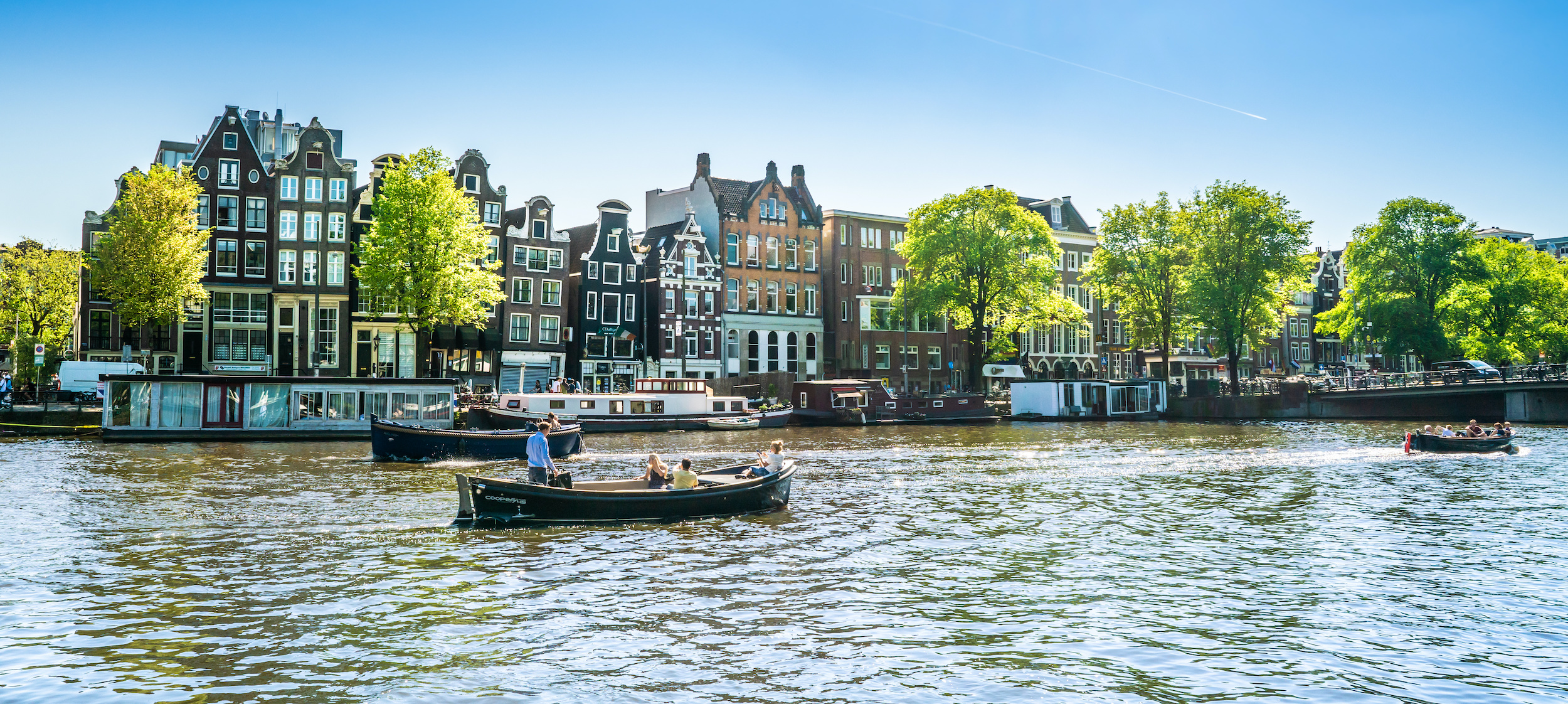

Very recently, the waters of the Amsterdam canals played host to prototype autonomous electric boats.
These boats, known as Roboats, are modular and are equipped with orange propellers, thrusters and an electric battery. Dependant on the weight of the load on the boat, the battery can last between 12 and 24 hours.
They have been designed as part of the Roboat project – a collaboration between the Massachusetts Institute of Technology and the Amsterdam Institute for Advanced Metropolitan Solutions. According to an article on phys.org, the project’s aims are to produce boats that deliver services such as the transportation of passengers – all without a human operator onboard.
The autonomous features of the boat stem from sensors and cameras that scan areas around the vessel for hazards and obstructions whilst it’s moving. The data is then fed back to a remote computer which controls the boat’s movements.
The demonstration saw the boat float across the water with passengers aboard, though its autonomous and self-steering features still have some hurdles to jump through before we see them in full flow, with the developers of the Roboat stating they might need up to four years to foolproof the technology.
“It’s mostly because we want to be absolutely sure that we can navigate safely in the canals,” said Rens Doornbusch, a mechatronics engineer for the Roboats.
“Right now we have the autonomy in place, but one of the next steps is to make sure that we can actually handle any kind of situation that we might encounter in the canals.”